


Homeowners Insurance Quotes in Jacksonville, FL
What You Should Know About Home Insurance in Jacksonville
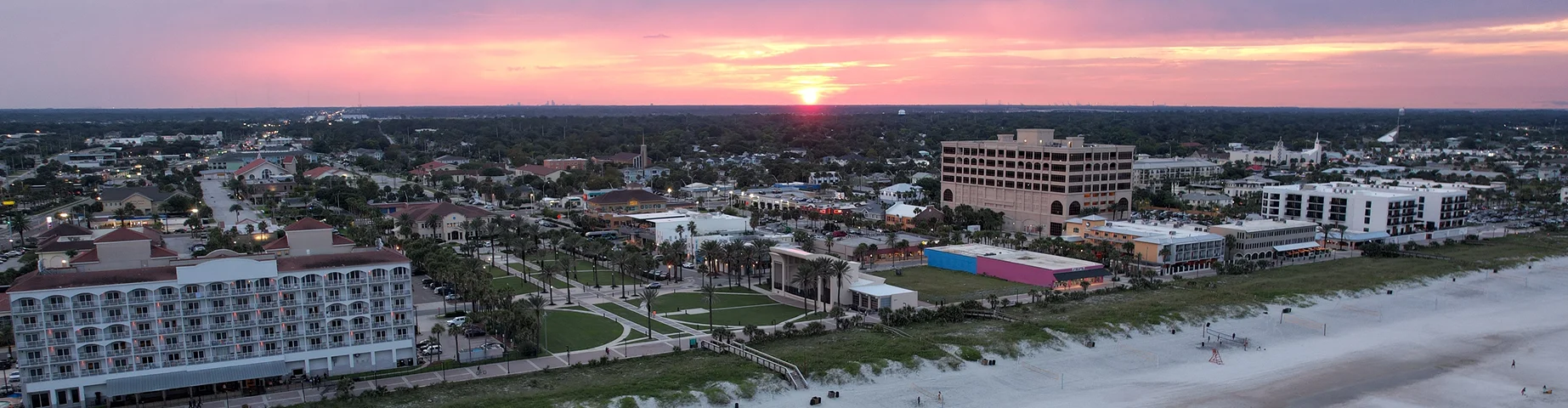
Jacksonville, with a population of just over one million, is a growing city on Florida’s east coast, known for its warm climate and beautiful beaches, but with these features comes risk. This appealing climate can quickly turn into tropical storms and hurricanes that cause considerable wind and flood damage.
This severe weather means increased claims, insurance fraud, and high litigation costs, along with more expensive rebuild prices, in turn causing stricter underwriting, with insurers requiring actions such as roof inspections and mitigation upgrades, and some insurers leaving the state. The weather has also created a dire need for homeowners insurance in Florida but has left some residents asking, “Why is home insurance so expensive in Jacksonville?”
Insurers may not refuse home insurance coverage in Jacksonville based solely on your roof’s age for homes with a roof less than 15 years old. If your roof is 15 years or older, your insurer must allow you to have an inspection and may not refuse coverage if it shows your roof has at least five more years of life.
When you purchase a policy, your insurer may mention replacement cost versus actual cash value. Replacement cost pays for the cost to replace your home and belongings, without factoring in depreciation, while actual cash value accounts for depreciation.
It is essential to factor in building code ordinances and law coverage, and how they may affect your home insurance coverage in Jacksonville. Codes are frequently updated with more stringent safety features to guard against hurricanes and determine construction standards, and these codes must be followed when repairing damage. A few examples:
- You may be required to fully replace your partially damaged roof to conform to new building codes.
- A full home rebuild must conform to current codes and structural requirements.
- New mandates may require you to install hurricane-resistant upgrades, such as impact-resistant windows.
Many residents have turned to Citizens Property Insurance, an insurance of last resort for homeowners who have had trouble obtaining private market coverage. Some questions you may want to ask:
- How much is homeowners insurance in Jacksonville?
- What does homeowners insurance cover in Jacksonville?
- Does homeowners insurance cover windstorm damage?
Whether you are buying a property in Jacksonville or already own one, working with the best homeowners insurance companies in Jacksonville can help you find the right insurance coverage.
Expert InsureOne agents provide white-glove service by comparing home insurance quotes in Jacksonville to help you find the best Florida home insurance at affordable rates with customizable policies to suit your specific requirements.
How Much Does a Homeowners Insurance Policy Typically Cost in Jacksonville?
After reviewing the chart below, you may be asking, “Why is home insurance so affordable in Jacksonville?”
Jacksonville rates are based on a number of factors, personal to each homeowner, but here is the average cost of home insurance in Jacksonville for different-valued homes:
| Dwelling Insurance Total | Average Annual Cost in Jacksonville | Average Annual Cost Nationwide |
|---|---|---|
| Homes $300K | $2,052 | $2,543 |
| Homes $600K | $3,877 | $4,400 |
| High-end Homes | $6,297 | $6,253 |
The average costs in this table have been derived from the cost of dwelling coverage, a liability limit of $100,000, and a standard deductible of $1,000.
Florida insurers frequently update home insurance premiums based on risk and the occurrence of severe weather, including hurricanes. If you live near the coast or in a flood or FEMA zone, your location typically means higher rates, and flood coverage is excluded from a standard policy — homeowners need add-on insurance for flood coverage.
Other factors influencing insurance costs include the age and type of your roof (e.g., metal versus shingle), whether you have wind-mitigation features like hurricane shutters and impact-resistant windows (the state requires insurers to provide a discount if you have these home features), and your home’s exact location.
Many Jacksonville insurers also use a comprehensive loss underwriting exchange (CLUE) report to see your claims history over the previous seven years, which helps them determine your premiums.
Consider getting multiple Jacksonville homeowners insurance quotes from the best homeowners insurance companies in Jacksonville each year to account for fluctuating rates. Speak with your agent about adding flood insurance, which may cause significantly higher premiums but provide maximum financial protection for your assets.
Your agent can go over all the specifics, compare home insurance quotes in Jacksonville, and help you make an informed choice so you wind up with high-quality, affordable homeowners insurance in Jacksonville that is right for you.

How Do Home Insurance Deductibles Change Insurance Rates in Jacksonville?
While Florida homeowners pay higher rates due to the substantial risk of storm damage, your home insurance deductible plays a significant role in determining your insurance premium. Generally, the higher your deductible, the lower your monthly or annual premium will be. This is because you are agreeing to pay more out of pocket in the event of a claim, which reduces the insurance company’s risk.
Florida is one of the many states in which homeowners policies also have a hurricane deductible, which applies when damage is a result of a hurricane declared by the National Hurricane Center and happens from the time of the storm watch or warning through 72 hours after the warning ends; it also applies when hurricane conditions exist in Florida. These deductibles are set by law, and homeowners only pay them once per calendar year. The hurricane deductible choices are typically $500 or 2%, 5%, or 10% of the policy’s limits, based on the home’s value. Your policy may also have a special deductible for windstorm damage due to Jacksonville’s higher risk for hurricanes.
The lower premium for a higher deductible may seem like a good idea, but it is essential to consider your risk tolerance. If your emergency savings include only a small amount of ready cash, making it impossible to pay a $20,000 deductible all at once after a hurricane, a lower deductible may be a better fit.
Since insurance is based on specific individual factors, there is no one price that fits everyone, so your insurer may start by letting you know the average cost of home insurance in Jacksonville.
Is Home Insurance Tax Deductible in Jacksonville?
Home insurance coverage in Jacksonville is generally not tax‑deductible for personal residences. This means that the premiums you pay for your home insurance typically cannot be deducted from your income taxes. However, there are some exceptions.
If you rent out part of your home or if you use a portion of your home for business, you may be able to deduct a portion of your homeowners insurance premium related to that space. Additionally, if your home is damaged in a disaster, such as a hurricane, you may be able to claim certain losses as a deduction on your taxes under certain circumstances.
Ask your tax professional about whether your situation makes you eligible for a tax deduction.
Does Jacksonville Have the 80% Homeowners Insurance Rule?
The 80% homeowners insurance rule, which is an industry standard rather than a law, requires your home to be insured for at least 80% of its replacement value to fully cover a loss. For instance, if the replacement cost of your home is $300,000, your insurance policy should cover at least $240,000. If your coverage is below the 80% threshold, you may not receive full compensation in the event of a claim and could be responsible for a portion of the costs. This rule ensures that homeowners are adequately protected, especially in hurricane- and storm-prone areas like Jacksonville.
Insuring your home for 80% of its rebuild value also protects you from a coinsurance penalty. If your home is underinsured, your payout will typically be reduced as a penalty. Here is the formula for determining your penalty: (The actual coverage amount ÷ required coverage amount) × loss amount = adjusted payout.
As an example, if you own a home in the Mandarin neighborhood with a rebuild value of $700,000. Your home’s required insurance amount under the 80% rule is $560,000. You decide to purchase $400,000 in coverage, then you wind up with $100,000 in fire damage. Your reduced payout with the coinsurance penalty is ($400,000 ÷ $560,000) × $100,000 = $71,428.
Due to rising rebuild costs, it is essential to have your insurance reviewed regularly to confirm you have adequate coverage. You may want to add an extended replacement cost (ERC) or guaranteed replacement cost (GRC) endorsement to your policy for extra financial protection.
ERC provides coverage for rebuild costs exceeding your policy limits, typically by anywhere from 50% to 125%. If you have $560,000 in coverage for your $700,000 home, but it costs $600,000 to rebuild, your ERC will pay that extra $40,000. With GRC, regardless of how much your home rebuild costs exceed your limits, this coverage pays for those excess costs.
Ask your agent to clarify the details about these endorsements regarding your unique circumstances. You can also have your agent provide a number of Jacksonville homeowners insurance quotes with varying levels of coverage to find the right rate for you.
Bundling Home and Auto Insurance in Jacksonville
How much is homeowners insurance in Jacksonville? Your answer depends, in part, on whether you are eligible for discounts.
Bundling home and auto insurance in Jacksonville can be a smart and straightforward way to save money while simplifying your coverage. Many insurers offer discounts for bundling policies, which could lead to significant savings on both your homeowners and auto insurance premiums. Your home insurance rates in Arlington will likely be different than home insurance rates in Lakeshore. But wherever you live, you can save up to 25% by having both policies with the same insurer.
Bundling also means dealing with a single company for both your home and car insurance, making it easier to manage payments and claims. It is a good idea to shop around to compare bundle deals, as rates can vary by insurer and your specific coverage needs. Just be sure that the bundled policy still provides adequate protection for both your home and vehicle, as savings should not come at the expense of coverage.
Ask your one-stop-shop insurer about other types of insurance to maximize savings. Agents provide quotes from the best homeowners insurance companies in Jacksonville.

What Weather Affects Home Insurance Costs in Jacksonville, Florida?
In Jacksonville, weather events like hurricanes, tropical storms, and flooding directly affect home insurance costs.
- Hurricanes: Though Jacksonville is less frequently hit than other parts of Florida, it still faces significant risks from hurricanes, especially those making landfall on the east coast. Notable storms like Hurricane Helene (2024) and Hurricane Irma (2017) caused wind damage, flooding, and power outages, leading to higher premiums, particularly for coastal homes.
- Tropical storms: Jacksonville also experiences tropical storms, such as Hurricane Elsa in 2021, which caused heavy rainfall, flooding, and wind damage. These storms, while less intense than hurricanes, still increase the risk of damage and raise insurance costs, especially for homes near water or in low‑lying areas.
- Flooding: The city’s proximity to the St. Johns River and the Atlantic Ocean makes it especially vulnerable to flooding. Storm surges, rainfall, and rising sea levels heighten this risk. Areas near the river or coast typically face higher rates for flood coverage, which is separate from homeowners insurance in Jacksonville. If you have a mortgage, your lender will likely require you to have flood insurance.
Florida’s roof restrictions allow homeowners to have an authorized roof inspection before an insurer may require roof replacement. Insurers are prohibited from denying insurance solely on the basis of roof age when the inspection indicates the roof has five or more years left before needing replacement.
To help protect your home from the risk of severe weather, you may want to see if you qualify for financial assistance to help you with free wind-mitigation inspections and grants for approved upgrades through the MySafe Florida Home program.
What Are the Different Types of Homeowners Coverage Offered in Jacksonville?
Jacksonville homeowners policies are broken down into the following forms:
- Coverage A: The structure (the house)
- Coverage B: Other structures, like sheds
- Coverage C: The structure’s contents (personal belongings)
- Coverage D: Additional living expenses (loss of use)
- Coverage L: Personal liability
- Coverage M: Medical payments to others
Having the right property insurance in Jacksonville is essential, and there are various policy types designed for different needs:
- HO‑1 (Basic Form): A basic policy offering limited coverage for risks like fire and theft, though it is rarely used today.
- HO‑2 (Broad Form): Expands on HO‑1 by covering additional risks such as damage from falling objects.
- HO‑3 (Special Form): This is the most common insurance among Florida homeowners, It offers comprehensive coverage for both the structure and personal property, with specific exclusions.
- HO‑4 (Renters Insurance): Tailored for renters, covering personal belongings and liability but excluding structural damage.
- HO‑5 (Comprehensive Form): The most extensive policy, providing higher limits for valuable items and broader protection overall.
- HO‑6 (Condo Insurance): Designed for condo owners, covering personal property and unit‑specific structures.
- HO‑7 and HO‑8: Specialized policies for mobile homes (HO‑7) and older homes (HO‑8), addressing the unique needs of these dwelling types.
There are also optional endorsements you can add to your Jacksonville homeowners policy for extra financial protection:
- Flood damage is one of the most common forms of damage from natural disasters, including in low-risk areas like East Jacksonville, and is excluded from standard policies.
- Sinkhole coverage offers protection from sinkhole damage to your house and personal property inside. This damage is defined as structural damage, such as cracked foundations or walls, resulting from ground settling or weakening.
- Equipment breakdown covers repairs or replacement of equipment such as appliances, air conditioning units, computers, water heaters, and furnaces, due to mechanical or electrical failure. It also reimburses costs for spoiled food and additional living expenses. This coverage is typically cheaper than a home warranty.
- Water backup coverage protects against damage from backed-up sewers, sumps, or drains (e.g., toilet overflow).
Choosing the right property insurance in Jacksonville ensures your assets are well protected.
What Does Homeowners Insurance Not Cover in Jacksonville?
It is essential to understand your property insurance in Jacksonville, including exclusions in your policy, before you purchase it. The exclusion of flood protection in standard policies for homeowners insurance in Jacksonville means your home and belongings are only financially protected from these events when you purchase flood insurance through the National Flood Insurance Program (NFIP) managed by FEMA — or through a private insurer, which may offer higher coverage limits, provide temporary living expenses (which NFIP may not), and can be personalized to each individual homeowner’s needs, whether you need home insurance rates in the Beaches area or later need property insurance in Nassau County.
Another exclusion in a typical policy is sinkhole damage. The state requires that all insurers offer sinkhole coverage, but some may only provide it after geological testing of your property confirms it is free of sinkhole activity.
Standard policies typically exclude damage from wear and tear and from lack of maintenance. Also, your standard policy may have limits on mold damage coverage: sudden mold, such as from a burst pipe, is more likely to be covered than mold from neglect (e.g., a pipe that leaks over time). Ask your agent about adding a mold endorsement to your standard policy to increase the limits on your mold property coverage or a mold liability endorsement, which covers expenses if someone gets sick from exposure to mold in your home.
How To Save on Home Insurance in Jacksonville
There are a number of ways to obtain affordable homeowners insurance in Jacksonville. Ask your agent about the following:
- Bundle your home and auto coverage for savings of up to 25% off your policies.
- Earn a discount on your Jacksonville home coverage by installing wind-mitigation features like roof straps and hurricane shutters.
- Avoid filing claims for small losses to maintain a claim-free discount.
- Increase your deductible to the most you can afford to pay if you need to file a claim, while also keeping your premiums at an affordable homeowners insurance rate in Jacksonville.
- Get a windstorm mitigation inspection to qualify for windstorm mitigation credits and discounts. Ask your agent for more details.
- Maintain good credit or improve your credit score.
Shop with InsureOne regularly for the best Jacksonville homeowners insurance quotes, especially if any of your personal information has changed, which may make you eligible for additional discounts.
How To Choose the Right Homeowners Insurance Policy in Jacksonville
With so much information to go over, it may be difficult to determine the right Jacksonville homeowners insurance policy for your needs. Here are some tips for choosing the right coverage:
- Determine your home’s replacement cost: The cost to rebuild it with similar materials in its current condition. Factors considered to determine your home’s replacement cost include your home’s age, square footage, materials (e.g., flooring, roofing, countertops), house style, and foundation type. For a rough, quick estimate, multiply the square footage by current building costs in your area. Your agent can figure out your replacement cost.
- Compare coverage limits and exclusions: Be sure to go over your policy’s limits and exclusions to confirm you have the coverage you want for the best financial protection. Your agent can go over certain scenarios to help you decide which limits best suit your needs and whether your policy’s exclusions necessitate paying for endorsements.
- Evaluate your insurer’s financial strength: You want to be sure your insurer will be there for you when you need to file a claim. That means having an insurer that is financially sound. The best way to assess the strength of your insurer’s financial health is to visit and compare ratings from at least two ratings agencies.
- Review all deductibles: Double-check that all your other perils (AOP) and your hurricane deductibles are at a level you can afford when you need to file a claim. AOP deductibles are usually a flat rate, while hurricane deductibles are typically a percentage of your home’s insured value (2%, 5%, or 10%).
The best way to find the right coverage is by working with an expert agent. InsureOne agents shop around and compare options with varying levels of coverage and different deductibles to build you a customized policy at prices so competitive you may just be left asking, Why is home insurance so affordable in Jacksonville?
What Is the Most Common Type of Home Purchased in Jacksonville?
The most common type of home purchased in Jacksonville is a single‑family home. This type of housing is particularly popular due to the city’s suburban areas, spacious neighborhoods, and relatively affordable real estate compared to other Florida cities. Many people buy single‑family homes for their larger lot sizes, privacy, and family‑friendly environments.
Additionally, Jacksonville’s diverse housing market offers a variety of architectural styles, from modern builds to historic homes, catering to different preferences. Townhomes and condos are also popular, especially among young professionals and those looking for lower‑maintenance options, but single‑family homes remain the most sought‑after choice.
Which Common Natural Disasters Are Covered by Home Insurance in Jacksonville?
Home insurance typically covers several common natural disasters, but there are important exceptions, especially when it comes to flooding. Here is a breakdown:
- Wind Damage: Dwelling coverage in Jacksonville usually provides protection for wind damage, which is especially important given the city’s vulnerability to hurricanes and tropical storms. This includes damage caused by high winds, fallen trees, and debris. However, some policies may have separate hurricane or windstorm deductibles.
- Fire: Standard home insurance policies typically cover fire damage, including damage from wildfires, which can occur during dry spells.
- Lightning: Home insurance policies typically cover damage from lightning strikes, including fires or power surges caused by lightning.
- Hail: Standard home insurance policies typically cover hailstorms, which can cause significant damage to roofs, windows, and siding.
However, there are key exclusions:
- Flooding: Standard home insurance policies exclude flood damage. Given Jacksonville’s proximity to the St. Johns River and the Atlantic Ocean, many residents opt to purchase separate flood insurance for protection from this risk.
- Earthquakes: Standard home insurance excludes earthquake damage, though you can buy an earthquake endorsement.
It is essential for you to understand the specifics of your dwelling coverage in Jacksonville and consider purchasing additional protection, such as flood insurance, especially if you live in a flood‑prone area. You can have your agent compare home insurance quotes in Jacksonville with different deductibles to make your insurance more affordable.

Get the Best Homeowners Insurance in Jacksonville with InsureOne Today
You have questions, and we have answers. Whether you are already enjoying Jacksonville’s beaches and vibrant city or considering the move, homeowners insurance helps protect your property from risks like hurricanes and high winds.
Your concierge agents at InsureOne are here to provide top-tier service, ensure your home is protected, and help you find cost savings. Discover our tailored homeowners insurance options designed to fit your unique needs. Just call us to speak to one of our experts at (800) 836‑2240, fill out a form for a homeowners insurance quote online, or visit us at a nearby office.
FAQs
What Is the Average Hurricane Deductible for Homes in Jacksonville?
Hurricane deductibles are typically percentage-based. The hurricane deductibles in Jacksonville range from 2% to 10% of your home’s insured value. Some may have a flat rate of $500.
Do Florida Homeowners Insurance Policies Cover Roof Replacement?
Yes, property insurance in Duval County covers roof replacement when the damage is from a covered peril.
Is Flood Insurance Required for Homes Near the St. Johns River?
While the state does not require flood insurance, lenders require homeowners in high-risk flood zones and even in some non-high-risk flood zones to carry flood insurance. Your agent can determine whether your home is in a high-, moderate-, or low-risk flood zone and whether flood insurance is required.
How Often Should You Update Your Homeowners Insurance Coverage in Florida?
You should update your dwelling coverage in Jacksonville, Florida, at least once a year or after any major renovations to your home that may have changed your home’s value.