


Alaska Car Insurance
Everything You Need to Know About Auto Insurance in Alaska
Situated far in the north, Alaska is the coldest and most remote state in the U.S., with limited winter daylight, snow, and icy roads, all of which can affect auto coverage rates. How much does car insurance cost in Alaska? What are the car insurance laws in Alaska? What are the Alaska DMV insurance requirements? Below is an in-depth look at the state, discussing everything you need to know about auto coverage, including how to get affordable car insurance in Alaska.
Alaska is laced with Indigenous culture, with a history of successful fishing, timber, mining, and oil industries, all of which are still prominent today. The state is massive — larger than Texas, California, and Montana combined — and has the lowest population density in the country. Millions of yearly visitors come to experience Denali National Park, Glacier Bay, Kenai Fjords, the Inside Passage, the Arctic coast, and the state’s unmatched opportunities for wildlife viewing, hiking, fishing, and scenic drives.
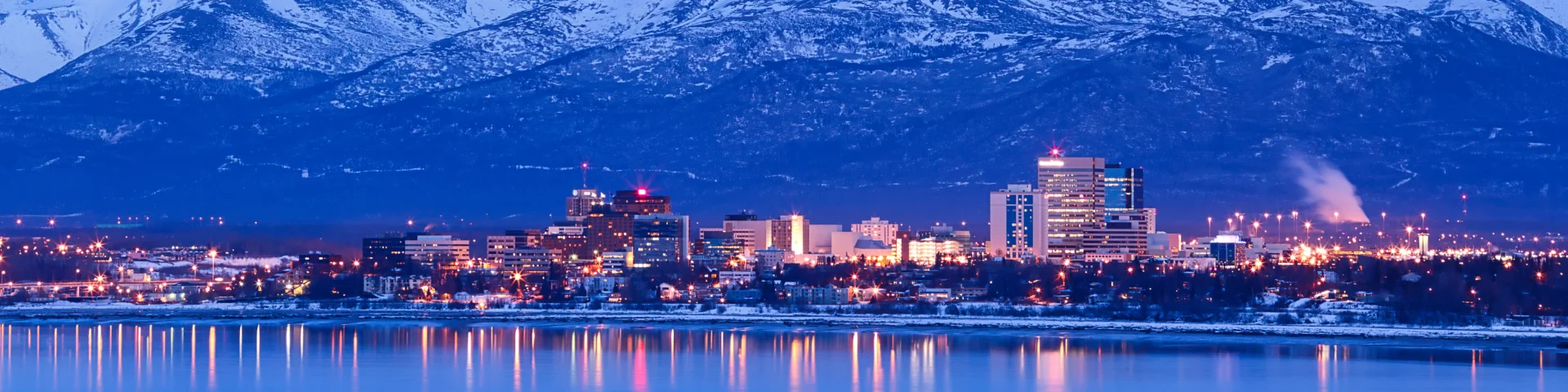
With around 740,000 residents living across 665,384 square miles, there is almost a mile per person in this state. Most of the city driving is in municipalities like Anchorage, Fairbanks, Juneau, and Wasilla, while the majority of the state consists of long stretches of quiet, winding roads. Whether you are driving the Parks Highway, the Glenn Highway, the Seward Highway, or the remote routes leading toward the Interior or the Arctic, be prepared for snow, ice, freezing rain, limited daylight, steep grades, avalanches, and wildlife crossing unexpectedly. Partner with an expert InsureOne agent to find the best car insurance in Alaska to ensure you are covered for accidents on the road.
How Much Does Car Insurance Cost in Alaska?
Alaska car insurance is slightly more costly than the national average. Residents pay an average of $2,167 per year for full coverage car insurance in Alaska and $681 for minimum liability insurance. U.S. averages for full coverage and minimum liability are $2,014 and $622, respectively. Although the roads are mostly wide-open and rural with little traffic, the state’s many natural hazards lead to accidents that contribute to the cost of auto insurance in Alaska.

What Does It Mean If Alaska Is an At-Fault State?
Alaska’s at-fault system vs. the no-fault rules in other states plays an important role in how claims are handled. In an at-fault state like Alaska, when there is an accident, the driver determined to have caused the crash pays for both personal injury and property damage. The primary difference between Alaska’s at-fault laws vs. no-fault rules is that in a no-fault state, each driver files a claim with their own provider to recover injury-related costs, regardless of who caused the accident.
Affordable Car Insurance Rates Comparison by Cities in Alaska
When you compare car insurance quotes in Alaska, realize that just like every state has different rates, so does every city and even every ZIP code. Below is a chart showing how widely rates can vary in several municipalities in the state:
| City | Full Coverage Car Insurance in Alaska | State Minimum Liability Insurance in Alaska |
|---|---|---|
| Anchorage | $228 | $60 |
| Chugiak | $212 | $53 |
| Eagle River | $212 | $53 |
| Fairbanks | $220 | $36 |
| Juneau | $163 | $32 |
| Kodiak | $182 | $37 |
| North Pole | $219 | $36 |
| Palmer | $214 | $50 |
| Sitka | $165 | $30 |
| Wasilla | $211 | $41 |
Our average auto policy costs are based on a male driver, aged 30, with a clean driving record. Liability insurance in Alaska is the state‑required minimum. Full coverage car insurance in Alaska is based on a 100K/300K/100K policy. Your costs will depend on your individual circumstances.
How Bundling Your Vehicle and Homeowners Insurance Can Save You Money in Alaska
If you want to know how to get affordable car insurance in Alaska, ask your agent about the many discounts insurers offer, especially bundling. When you bundle policies such as auto and home insurance in Alaska, many providers offer discounts that can help lower your premiums. Larger population centers such as Anchorage, Fairbanks, and Juneau tend to have more insurers competing for customers, which often leads to bigger bundling discounts and more flexible pricing. In smaller or more remote areas, discounts may be smaller, but bundling still provides significant savings.
There is no need for you to shop and compare car insurance quotes in Alaska. Your InsureOne agent will evaluate your coverage needs, identify the insurers offering the strongest bundling incentives, and help you secure the best car insurance in Alaska at excellent rates.
Discounts for Car Insurance in Alaska
When you ask your agent how to get affordable car insurance in Alaska, they will likely introduce you to the many discounts for car insurance in Alaska, in addition to bundling. These are some examples, but there are many more discounts providers offer to help lower your premiums:
- Low mileage
- Good driver
- Defensive driver
- Military
- Antitheft
- Loyalty
- Good student
In addition, insurers are required by law to reduce rates for drivers over 55 who voluntarily complete an accident-prevention course.
In some cases, car insurance discounts in Alaska may be stackable. For example, if you are in the military, have a clean driving record, you do not use your car all that much, and you are renewing your policy with the same provider, you might be entitled to four discounts — military, good driver, low mileage, and loyalty. The more discounts you qualify for, the less you will pay for auto insurance in Alaska.

What Are the Car Insurance Laws in Alaska?
It is important to be familiar with some of the Alaska auto insurance laws that affect your coverage and driving experience. What are the car insurance laws in Alaska? Below you will find details on Alaska DMV insurance requirements, penalties for not meeting minimum car insurance requirements in Alaska, including the need to obtain SR-22 insurance in Alaska, and several other Alaska auto insurance laws.
What Are the Minimum Car Insurance Requirements in Alaska?
Alaska DMV insurance requirements dictate the levels of coverage drivers must obtain. Based on Alaska auto insurance laws, your policy must include the following coverages at a minimum:
- $50,000 for bodily injury per person
- $100,000 bodily injury per accident
- $25,000 property damage per accident
Although insurers must offer uninsured/underinsured motorist protection, you may reject this coverage. There are areas in the state where you are not required to register your vehicle. In those regions, there is no requirement to obtain Alaska car insurance at all, unless you receive a ticket for a violation that results in six or more points, in which case you would be required to carry liability insurance in Alaska.
What Is the Penalty for Driving Without Insurance in Alaska?
The state uses the Alaska Insurance Verification System to verify coverage when you register your vehicle and for renewals and transfers. However, if you fail to maintain the required insurance, you may be found guilty of an infraction, which may lead to mandatory SR-22 insurance in Alaska and the following penalties:
- A $500 fine
- A minimum 90-day license suspension for a first offense
- A minimum 1-year license suspension for a second offense within 10 years
- Possible vehicle impoundment
Under certain circumstances, such as for medical or work purposes, drivers caught without proof of coverage may be granted limited driving privileges upon obtaining SR-22 insurance in Alaska.
What Factors Does Alaska Law Allow in Determining Your Premiums?
Providers that issue Alaska car insurance review data regarding you, your vehicle, where you live, and many other details that may affect the risk of issuing you a policy. These are some of the many factors insurers consider:
- Age
- Gender
- Credit history
- Vehicle type
- Location
- Marital status
- Driving record
- Driving experience

What Happens If I Damage Property in Alaska?
If you cause property loss in an accident and want your insurer to help you pay for the damages, contact your provider immediately to file a claim. Generally, low‑speed collisions in Anchorage or Fairbanks will not exceed the state’s $25,000 property damage minimum. However, a high-speed crash coming around a curve on Seward Highway will likely mean that you will have to pay for some of the tab out of your own funds. As mentioned, Alaska’s at-fault (vs. no-fault ) rules also require you or your insurer to cover any injury-related expenses resulting from a collision you cause.
Although the state’s minimum requirements are higher than average in the U.S., you should consider getting full coverage or try to compare car insurance quotes in Alaska with higher limits. You can often increase coverage amounts with only a small increase in premiums. This will help you avoid paying out of pocket when you cause an accident.
What Is Driving Like in Alaska?
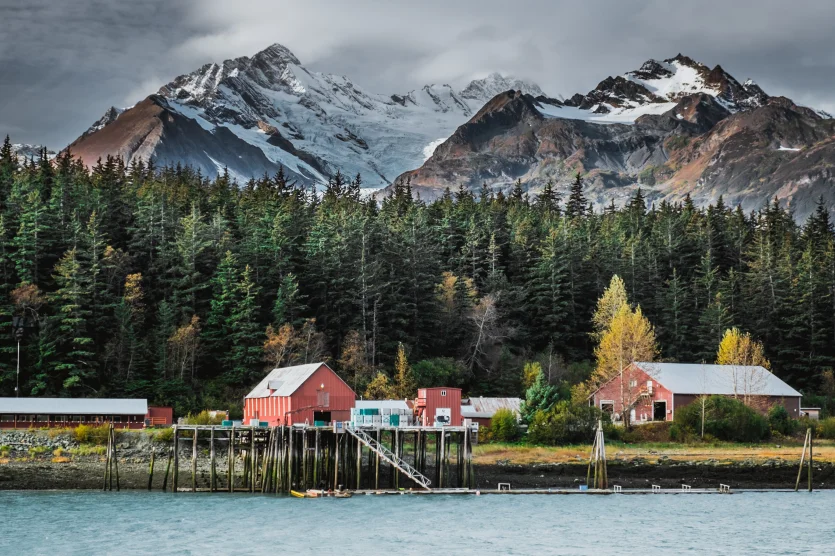
Very few cities in this state have major congestion, but municipalities like Anchorage, Fairbanks, Juneau, Wasilla, and Palmer definitely have rush-hour and seasonal tourist traffic. The bigger concern is what happens once you are on Alaska’s major highways. Long stretches of the Seward Highway, Glenn Highway, Parks Highway, and Sterling Highway have lots of curves, few exits, and long distances between services and exits, which can cause road fatigue. Snow, ice, freezing rain, and limited daylight are issues everywhere in the state, as are wildlife crossings and strong winds on highways, especially in wide-open areas.
How Many Car Accidents Happen in Alaska?
In 2023, there were 60 crash-related deaths in the state. The following data is for individual municipalities in 2024 within the state:
| City | Fatal Motor Vehicle Crashes |
|---|---|
| Anchorage | 27 |
| Chugiak | 0 |
| Eagle River | 0 |
| Fairbanks | 4 |
| Juneau | 0 |
| Kodiak | 0 |
| North Pole | 2 |
| Palmer | 2 |
| Sitka | 1 |
| Wasilla | 5 |
How Many Uninsured/Underinsured Motorists Are in Alaska?
In 2023, 12.5% of the state’s drivers were uninsured. That means that one out of eight motorists in the state would have to compensate you out of pocket if they crash into you. Since many of these drivers might not have the funds to do so, it may be wise to discuss obtaining uninsured/underinsured motorist coverage with your agent.
Get the Best Car Insurance in Alaska Today
As your one-stop shop for all your policies, InsureOne offers concierge insurance services to help you find quality, affordable auto insurance in Alaska. Our agents do all the work necessary to get you the coverage you need to protect yourself and your family.
Our expert agents are ready to give you the white-glove treatment you deserve as you secure the best car insurance in Alaska for your vehicle. To get started with our bilingual insurance services, reach out to us by getting a quote online, stopping by one of our offices, or calling us at 800‑836‑2240.
FAQs
How Much Does Car Insurance Cost in Alaska?
Full coverage car insurance in Alaska costs an average of $2,167. Minimum liability insurance in Alaska averages $681. Your InsureOne agent will help you compare car insurance quotes in Alaska to ensure you get the most affordable coverage available.
What Are the Minimum Car Insurance Requirements in Alaska?
Alaska DMV insurance requirements require insurers to issue policies with a minimum of $50,000 per person and $100,000 per accident for bodily injury coverage, and $25,000 property damage coverage per accident. Failure to maintain these minimums could result in fines, penalties, and mandatory SR-22 insurance in Alaska.
Is Alaska an At-Fault or No-Fault State for Car Insurance?
Alaska auto insurance laws follow an at-fault system. Negligent drivers pay for both property and injury-related damages.
What Factors Influence Car Insurance Rates in Alaska?
Alaska car insurance companies use your age, gender, credit history, vehicle type, location, marital status, driving record, driving experience, and many other factors to determine your rates.