


Hawaii Car Insurance
Everything You Need to Know About Car Insurance in Hawaii
If you have been curious about Hawaii’s DMV insurance requirements, you can learn all about them, plus how to get affordable car insurance in Hawaii, where to find the best car insurance in Hawaii, and more, right here. The average costs of car insurance in Hawaii can vary, so understanding what impacts your rate is important.
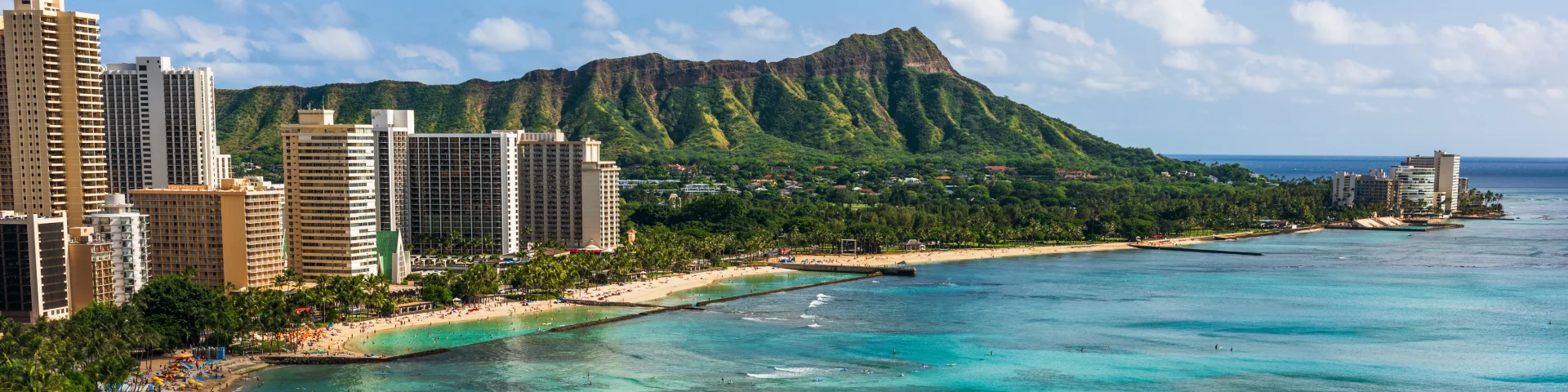
Hawaii, consisting of 132 islands of which just eight are inhabited, became a U.S. territory in 1898 and the 50th state in 1959. These eight inhabited volcanic islands are Hawaii, Maui, Molokai, Lanai, Oahu, Kauai, Niihau, and Kahoolawe. The state’s most active volcano, located on the island of Hawaii, is Kilauea at Hawaii Volcanoes National Park, which expands the island by more than 40 acres each year. Hawaii’s dry lava bed, Mauna Loa, is another popular destination with a surface resembling the moon.
The state is a major producer of sugarcane, pineapples, macadamia nuts, and coffee, and is also a well-known tourist destination. About 1.4 million live in Hawaii, which means a lot of drivers navigate congested city streets in Honolulu and on rural roads that curve above the ocean, such as portions of Kahekili Highway on Maui.
You are living your best life in this beautiful state. Make sure you protect yourself at the same time by having the best auto insurance in Hawaii. Unlike most states, Hawaii does not allow insurers to consider credit history, gender, age, or years of driving experience when determining car insurance rates, which can affect how you compare different carriers. To learn more about your auto coverage choices, the car insurance laws in Hawaii, how much car insurance costs in Hawaii, or to simply get a quote, get in touch with InsureOne. We are ready to help.
Introduction to Car Insurance
Car insurance is an essential part of responsible driving in Hawaii, offering vital financial protection for you, your passengers, and your vehicle. With the right car insurance coverage, you’re safeguarded against the unexpected—whether it’s a fender bender on a busy Honolulu street or damage from a tropical storm. Hawaii law requires drivers to carry a minimum level of auto insurance, including personal injury protection (PIP), bodily injury liability, and property damage liability. These coverages help pay for injuries and damages resulting from an accident, regardless of who is at fault.
When choosing a car insurance policy, it’s important to consider your driving history, the type of vehicle you drive, and your budget. Factors like your past claims, the age and model of your car, and how much you drive can all influence the amount of insurance coverage you need. By understanding your options and making sure you have enough coverage, you can drive with confidence knowing you’re protected on Hawaii’s scenic roads.
How Much Does Car Insurance Cost in Hawaii?
The average costs for car insurance in Hawaii are about $1,757 for full coverage and $475 for minimum liability insurance. Hawaii car insurance costs about 13% less than the national average of $2,014 for full coverage and about 23% less than the minimum coverage of $622.
The average annual cost of car insurance in Hawaii is $1,735, but actual costs can vary based on factors such as the vehicle, driving history, and coverage selections.
Reasons for the state’s lower rates include Hawaii auto insurance laws that restrict lawsuits and the state’s otherwise strict driving laws. Still, Hawaii experiences risk of severe weather and frequent rainstorms, such as hurricanes and tropical storms like the recent Kona systems, which cause widespread flooding. Cars, parts, and repair labor, along with medical care, have also become more expensive. These conditions have increased rates across the state, which may have left you wondering if there is still any affordable car insurance in Hawaii.
Car insurance premiums in Hawaii are influenced by factors such as driving record, mileage driven, and the area where the driver lives, but not by credit history, gender, age, or years of driving experience.

What Does It Mean If Hawaii Is a No-Fault State?
Hawaii is a no-fault state, which means each driver pays for their own medical care in an accident. While your own insurance covers medical expenses, property damage is still paid for by the at-fault driver, and a history of at-fault accidents can lead to higher premiums. Hawaii’s no-fault rules restrict lawsuits — in order to sue the other driver, you must have serious injuries or your medical costs must exceed a certain predetermined amount.
Hawaii is a no-fault state, so your insurance company pays for your injuries and those of your passengers up to the PIP limit, and you cannot sue unless there are serious injuries. This is different from at-fault states, in which the person who caused the crash must pay for all damages. Your expert agent can go over the specifics of Hawaii’s at-fault vs. no-fault rules for a better understanding of how they may apply to your unique circumstances.
Affordable Car Insurance Rates Comparison by Cities in Hawaii
There is only a small difference in coverage cost from city to city in Hawaii, as shown in the following chart:
| City | Full Coverage Insurance | Liability Insurance Coverage |
|---|---|---|
| Honolulu | $143 | $38 |
| Hilo | $155 | $36 |
| Pearl City | $143 | $38 |
| Waipahu | $145 | $38 |
| Kailua | $143 | $38 |
| Kaneohe | $143 | $38 |
| Makawao | $139 | $35 |
We arrive at our average auto insurance costs by using a male driver, aged 30, with a clean driving record. Liability insurance coverage is the state‑required minimum. Full coverage is a 100K/300K/100K policy. Your costs will be different and based on your individual factors.

How Bundling Can Save Money in Hawaii
Ask your agent about earning a multi-policy discount on car insurance in Hawaii through bundling. All you have to do is let your agent know you need coverage for more than one car or for another type of coverage in addition to your auto coverage.
If you need homeowners insurance for your home in Mililani Mauka on Oahu, along with your auto coverage, and you buy them together, you can earn up to 25% off both policies. Renters in Honolulu can earn up to 15% off the cost by bundling with auto coverage. Cost savings are not limited to these areas — no matter where you live in Hawaii, you can save with bundling.
Other benefits:
- One bill to pay
- Your agent does all the shopping
- One set of policy documents to manage
- A strong relationship with a trusted expert agent
Bundling works with more than just homeowners or renters insurance and auto coverage. You can bundle any kind of coverage, such as landlord, boat, business, or motorcycle insurance. Your one-stop-shop agent is happy to compare auto insurance quotes and bundles of different types of coverage in Hawaii to see how much you can save on your policies.
Auto Insurance Discounts in Hawaii
Another way to save is to apply other available discounts for car insurance in Hawaii to your policy. These discounts may include:
- Loyalty
- Military
- Good driver
- Safe driver
- Low mileage drivers
- Violation-free driving record
- Pay in advance
- Paperless billing
- Car safety features
Many insurance companies offer discounts for safe driving, which can significantly lower your auto insurance premium. Common discounts available for auto insurance include those for low mileage drivers, violation-free driving records, and multi-car policies.
Hawaii is one of the few states with a government program, administered by Hawaii’s Department of Human Services, for low-income people to receive free auto insurance. To qualify, you must receive supplemental security income from Temporary Assistance for Needy Families, General Assistance, or Aid to the Aged, Blind, or Disabled. There are also other rules to qualify for this free liability and personal injury protection coverage. Your agent can help you determine whether you qualify for this program.
Hawaii Car Insurance Laws
There is no need to search the internet for questions like, “What are the car insurance laws in Hawaii?” Simply put: You must have liability car insurance in Hawaii and carry proof of your insurance to drive legally in the state.
Hawaii law also allows drivers to show proof of car insurance using an electronic version, such as a digital ID card on a mobile app, when requested by authorities.
According to Hawaii DMV insurance requirements, you may either purchase your policy from a company licensed to do business in the state or one licensed to sell policies for the insurance company. The section below goes into more detail about Hawaii car insurance and Hawaii’s auto insurance laws.
What Are the Mandatory Car Insurance Requirements in Hawaii?
The state’s DMV insurance requirements mandate that you, as a resident who drives, have the following minimum car insurance requirements in Hawaii:
- $20,000 bodily injury for one crash/one person.
- $40,000 bodily injury per accident.
- $10,000 property damage per accident.
- $10,000 personal injury protection per person, which covers medical. expenses for the driver and passengers regardless of fault.
While you are not required to buy uninsured/underinsured motorist protection, your agent must offer it to you, and you must decline it in writing if you do not want it.
Ask your agent about full coverage car insurance in Hawaii, which consists of collision coverage to pay for your vehicle in an accident you cause and comprehensive coverage for non-collision events (loss from natural disasters, theft, vandalism, etc.). If you lease or finance your vehicle, your lender or lease agreement will typically require you to carry both collision and comprehensive coverage to protect their interest in the vehicle.
You may also wish to consider add-on coverage, such as car rental reimbursement and roadside assistance. Your agent can compare car insurance quotes in Hawaii with different add-ons and coverage limits to find you an ideal rate among what is available.
What Is the Penalty for Driving Without Insurance in Hawaii?
If a law enforcement officer catches you driving without coverage, you may be subject to the following penalties:
- Fines ($500 for first offense; up to $5,000 for repeat offenders)
- Suspended license (from three months to one year)
- Up to 275 hours of community service
- Vehicle impoundment
- Jail time (up to 30 days)
- Wage garnishment and asset seizure (if you cause an accident)
- Requirement for SR-22 insurance in Hawaii for three years
There are three types of SR-22 insurance in Hawaii — an operator’s certificate, an owner’s certificate, and a combination of both — and each one proves your financial responsibility. Situations where you must file a certificate for SR-22 insurance in Hawaii include failing to pay for an accident you cause, driving under the influence, or driving with a suspended license. Your agent will file this certificate with the state on your behalf, and you must carry a copy with you when you drive. Be sure to discuss Hawaii auto insurance laws with your agent if you have questions.
What Factors Does Hawaii Law Allow in Determining Your Premiums?
Hawaii insurers consider a number of factors when determining your premium, including:
- Car make and model (helps estimate cost to fix or replace)
- Where you garage your car
- Your residence ZIP code
- Your claims history
- Your policy limits
- Your deductible
- Mileage
- History of at-fault accidents (drivers with at-fault accidents typically face higher premiums)
- Low mileage drivers (driving fewer miles can help lower your premiums)
Hawaii law does not allow insurers to consider credit history, gender, age, or years of driving experience when determining premiums.

Auto Insurance Coverages in Hawaii
Hawaii drivers have access to a variety of auto insurance coverages designed to meet different needs and budgets. The most common types of coverage include:
- Liability Coverage: This is required by Hawaii law and helps pay for injuries or property damage you cause to others in an accident. It includes both bodily injury and property damage liability.
- Personal Injury Protection (PIP): Also mandatory in Hawaii, PIP covers medical expenses for you and your passengers, regardless of who caused the accident.
- Collision Coverage: This optional coverage helps pay for repairs to your vehicle if you’re involved in a collision, whether it’s with another car or an object like a guardrail.
- Comprehensive Coverage: Protects your car from non-collision events such as theft, vandalism, fire, or damage from natural disasters—important in Hawaii’s unpredictable weather.
- Uninsured/Underinsured Motorist Coverage: While not required, this coverage can protect you if you’re in an accident with a driver who doesn’t have enough insurance.
You can also add extra protection with options like roadside assistance, rental car reimbursement, and gap insurance. Your insurance agent can help you review your auto insurance coverages to ensure you have the right level of protection for your lifestyle and driving habits.
How to Get a Car Insurance Quote in Hawaii
Getting a car insurance quote in Hawaii is a straightforward process that can help you find the best coverage at the most competitive price. Start by gathering some basic information, such as your driver’s license number, vehicle details, and driving history. You can request a free car insurance quote online, over the phone, or by visiting a local agent.
Comparing car insurance quotes from multiple insurance companies is the best way to ensure you’re getting the right coverage for your needs. Each insurer may offer different rates and discounts based on factors like your driving record, the type of car you drive, and how much you drive each year. By taking the time to compare quotes, you can find a policy that fits your budget and provides enough coverage for peace of mind. InsureOne makes it easy to compare quotes and customize your car insurance policy, so you can drive with confidence on Hawaii’s roads.
Working with an Insurance Agent in Hawaii
Partnering with a local insurance agent in Hawaii can make a big difference when it comes to finding the right car insurance policy. An experienced insurance agent understands the unique driving conditions and insurance requirements in Hawaii, and can help you navigate your options with ease. Agents can compare quotes from multiple insurance companies, identify various discounts you may qualify for, and tailor your coverage to fit your specific needs.
Working with a local agent also means you have a trusted resource to answer your questions, help you understand your policy, and assist you if you ever need to file a claim.
At InsureOne, our agents are committed to providing personalized service and ongoing support for policyholders across Hawaii. Whether you’re insuring a new car, bundling policies for extra savings, or simply looking to review your current coverage, your local agent is here to help you every step of the way.
What Happens If I Damage Property?
If your eyes leave East Manoa Road in Honolulu to admire the latest rainbow and you crash into another car — or even into a fence — you will be happy to know you have liability coverage to help cover the cost. Some drivers pay for a little extra coverage than the minimum car insurance requirements of $10,000 to avoid paying out of pocket for serious accidents or those with expensive cars, which can cost well over $10,000.
Your expert agent is happy to compare car insurance quotes in Hawaii to build a policy with competitive rates that suits your unique needs.
Car Accident and Insurance Claims in Hawaii
If you’re involved in a car accident in Hawaii, knowing what to do next can help protect your rights and ensure your insurance coverage works for you. First, make sure everyone is safe and call for medical help if needed. Exchange information with the other driver and gather details about the accident, including photos and witness statements if possible.
Next, notify your insurance company as soon as possible to start the claims process. Your insurer will guide you through the steps, from submitting documentation to arranging for vehicle repairs or covering medical expenses. If you’re not at fault, your insurance company may work with the other driver’s insurer to recover costs. In cases of hit and run accidents or if the at-fault driver is uninsured, your own coverage—such as uninsured motorist protection—can help cover your losses.
Throughout the claims process, your insurance agent can be a valuable advocate, helping you understand your policy, answer questions, and ensure your claim is handled efficiently. With the right insurance coverage and support, you can focus on getting back on the road after an accident.

Driving Conditions in Hawaii
Some studies rank Hawaii as the worst state for driving, citing high gas prices, congestion, and poor road conditions. While the state has experienced its fair share of traffic issues, the Hawaii Department of Transportation continues working hard to improve conditions — but watch out for changing traffic patterns during road construction.
Some roads can be difficult to navigate, like the steep winding roads of Oahu’s Pali Highway and the two-lane Kamehameha Highway. You are likely to experience mist or rain on your drive, a common occurrence in the Rainbow State, which may cause slippery conditions and hydroplaning. No matter where you drive, do so with confidence that you have the best car insurance in Hawaii to help keep you safe. You can find links to traffic conditions on Hawaii’s government website.
Uninsured/Underinsured Motorists in Hawaii
According to the Insurance Information Institute, 9.6% of Hawaii drivers were uninsured in 2023. To help protect yourself from the financial devastation these uninsured drivers may cause, you may wish to add uninsured/underinsured motorist bodily injury coverage.
Uninsured/underinsured motorist coverage can also provide protection if you are involved in a hit and run accident, helping cover your expenses when the at-fault driver cannot be identified or does not have sufficient insurance.
Get the Best Car Insurance in Hawaii Today
Now that you no longer need to search the internet for questions like, “What are the car insurance laws in Hawaii?” — and now that you know how to get affordable car insurance in Hawaii, it is easy to take the next step. InsureOne’s expert agents are ready to extend white-glove, personalized service to find you top-tier coverage at affordable rates.
If you are ready for a concierge experience, get in touch in one of three easy ways. We do all the shopping for you to put together a customized policy that fits all your insurance needs. And we are bilingual. To get started, you can call us at (800) 836-2240, fill out an online form, or visit us at your local Hawaii office.
FAQs About Hawaii an Car Insurance
Can I Use an Electronic Proof of Insurance in Hawaii?
Yes, Hawaii allows drivers to show proof of car insurance using an electronic version, such as a digital ID card on a mobile app. This makes it easier to carry and present your insurance information when requested by law enforcement.
Are There Discounts for Safe Driving in Hawaii?
Many insurance providers offer discounts for safe driving, including having a violation-free driving record, low mileage, and multi-car policies. These discounts can significantly reduce your car insurance premiums.
What Happens If I Drive Without Insurance in Hawaii?
Driving without insurance in Hawaii can result in severe penalties, including fines, license suspension, community service, vehicle impoundment, and even jail time. Repeat offenses carry higher fines and longer suspensions.
Does Bundling Insurance Policies Save Money in Hawaii?
Yes, bundling multiple insurance policies, such as auto and homeowners or renters insurance, can lead to significant savings. Bundling also simplifies managing your policies by consolidating billing and documentation.