



Vermont Homeowners Insurance Quotes
Essential Guide to Car Insurance and Homeowners Insurance in Vermont
A great way to find Vermont homeowners insurance is to work with an expert agent who can compare home insurance quotes from the best homeowners insurance companies in Vermont.
Learning all about homeowners insurance in Vermont, including whether homeowners insurance in Burlington may cost more than in Montpelier, and the reasons why home insurance is so affordable in Vermont, can help simplify the process.
Vermont earned its nickname, the Green Mountain State, due to its dense forests and mountainous terrain. The state’s approximately 650,000 residents are spread throughout, with Burlington having the largest population. Vermont’s economy thrives partly on the production of maple syrup, granite, slate, and marble. The state is also famous for its over 100 covered bridges, some dating back to 1820.
Both comfortable summers and snowy winters attract tourists who enjoy outdoor activities such as skiing and hiking. However, shortened freeze periods and increased rainfall have caused more frequent flooding. This weather can leave you with questions like: What does homeowners insurance cover in Vermont? Does homeowners insurance cover floods or landslides in Vermont?
When you work with an expert InsureOne agent, you get answers to your car insurance questions along with white-glove service and cost savings. Agents shop around to find you the best home insurance coverage in Vermont at competitive rates. We provide top-tier service to find plans personalized just for you, which means you get affordable homeowners insurance in Vermont.
Understanding Homeowners Insurance Costs in Vermont
Questions like “How much is homeowners insurance in Vermont?” have varying answers. For a $300,000 home, homeowners pay about $1,063 a year for the average cost of dwelling coverage in Vermont, which is roughly 40% of the national average of $2,543 a year ($212 a month).
Why is home insurance so affordable in Vermont? While Vermont has a lower risk of natural disasters than other states, some ZIP codes are more at risk than others. Recent floods have led to more claims and cost increases. Vermont’s home prices have also been increasing while the cost of rebuilding supplies has risen.
These shifting situations highlight the importance of having high-quality home insurance coverage in Vermont.

How to Find the Best Home Insurance in Vermont
Shopping around with an agent can save you time from searching the internet for “affordable homeowners insurance in Vermont.” An expert agent will compare car insurance quotes and home insurance quotes from the best homeowners insurance companies in Vermont to give you the best choices for coverage.
Prices for property insurance in Vermont vary depending on where you live. For example, if you live in Montpelier, you may pay a little more for insurance than if you live in Burlington due to more older homes, which cost more to replace.
Does homeowners insurance cover floods? To protect against flooding events like the July 2023 flood in Montpelier, you will need to add a flood endorsement to your standard policy.
There are several risk mitigation factors you can complete to help protect your home from severe weather:
- Install a rain barrel
- Install a sump pump
- Install flood vents in your attic and garage
- Seal your foundation with mortar and masonry caulk
- Maintain proper drainage and runoff around your home
When you read your policy, it is essential to understand your coverage, including the difference between water and flood damage. Water damage, typically included in a standard policy, covers events like damage from an overflowing toilet or burst pipe, whereas flooding usually results from a weather event and requires additional coverage.
Impact of Deductibles on Homeowners Insurance Rates in Vermont
From Bennington to Newport, when you buy your homeowners insurance in Vermont, your agent will help you choose a deductible—the amount you pay out of pocket when filing a claim before your insurer pays its portion. A lower deductible results in a higher premium, while a higher deductible lowers your premium.
Here are some scenarios for a $2,000 deductible with storm damage to your Essex home:
- $1,500 in damage: You pay the full amount out of pocket.
- $2,000 in damage: You pay the full amount out of pocket.
- $2,100 in damage: You pay $2,000, insurer pays $100.
- $10,000 in damage: You pay $2,000, insurer pays $8,000.
In the third case, you might pay the extra $100 yourself to avoid your insurer raising your rates. With a lower deductible, your insurer covers more costs, but filing more claims could increase your rates. This might leave you wondering, “Why is home insurance so expensive in Vermont?” This is where having an expert agent helps.
Your agent can assist by comparing home insurance quotes in Vermont to provide the best Vermont homeowners insurance quotes along with the right deductible for your unique circumstances.

Save Money with Insurance Bundling in Vermont
The average cost of home insurance in Vermont depends on several factors, including whether you bundle your policies. When you bundle your auto insurance and home insurance in Vermont, you become eligible for a multi-policy discount and may save up to 25% on both policies. Many insurers offer multi-policy discounts, and bundling insurance can lead to significant savings on your car insurance rates—sometimes over $700 when policies are combined. If you live in Burlington, your savings may be lower than someone bundling in Milton due to differing average home insurance costs.
Whether you need property insurance in the Northeast Kingdom or want to compare car insurance quotes in Champlain Valley, ask your agent about how much you can save with bundling. Bundling insurance also simplifies managing your policies, making it easier to keep track of your auto coverage and home insurance coverage. Bundling applies to other types of insurance as well, such as renters, landlord, or business insurance. You may also qualify for other discounts, like pay-up-front or home safety features.
Think of your insurance agent as a one-stop shop for all your coverage needs, providing you with essential dwelling coverage in Vermont for your assets. With the same provider, you can insure both your home and vehicle and customize your auto insurance coverage options and limits when bundling.
Homeowners Insurance Cost Comparison in Vermont
The average cost of your home insurance in Vermont depends on your home’s value. Also, homeowners insurance in Burlington will likely cost less than home insurance rates in the Capital Region due to differences in factors like crime and natural disaster rates.
The following chart compares home insurance quotes in Vermont for different home values:
| Dwelling Coverage (Vermont) | Average Annual Insurance Cost |
|---|---|
| $200,000 | $819 |
| $300,000 | $1,063 |
| $400,000 | $1,311 |
| $600,000 | $1,773 |
| $1,000,000 | $2,455 |

Tax Deductibility of Home Insurance in Vermont
Homeowners can deduct home insurance only in certain circumstances, some allowing just a partial deduction. Examples include:
- Running a daycare out of your house.
- Using a room in your house for a business office.
- Renting out your garage as storage space for a business.
- Owning and renting out a second house as a business.
Consult your accountant about your specific situation to determine if you can deduct any homeowners insurance in Vermont.
Understanding the 80% Homeowners Insurance Rule in Vermont
Yes, insurers follow the 80% rule in Vermont. This rule ensures your policy provides at least 80% coverage of your home’s replacement value. For example, for a Cambridge home with a $400,000 replacement value, you need $320,000 in coverage (80% of $400,000).
Keep in mind replacement values increase when material and labor costs rise. If you upgrade your home, such as remodeling your kitchen, inform your agent to ensure adequate coverage.
Key Factors Affecting Homeowners Insurance Premiums in Vermont
Whether you need homeowners insurance in South Burlington, Middlebury, or elsewhere, Vermont insurers review several factors when determining your premium, including:
- ZIP code
- Age of your home
- Credit history
- Construction materials
- Residence square footage
Your property insurance in Vermont may exclude certain coverage, such as flood damage, unless you have added specific coverage for that peril. Your agent will also consider area risks like:
- Severe windstorms
- Distance from a fire station
- Frequency and severity of flooding
- Frequency and severity of snowstorms
As of July 2024, builders must follow Vermont residential building energy standards, which may increase homebuilding and coverage costs.
When your agent provides Vermont homeowners insurance quotes, ask about the specific factors reviewed and whether steps like installing a home security system may qualify you for discounts. Your agent’s goal is to find premium homeowners insurance in Vermont that protects your assets at a rate fitting your lifestyle.
Overview of Home Insurance Types in Vermont
No matter your home type, you may have questions like: What does homeowners insurance cover in Vermont? Does homeowners insurance cover flooding? How much is homeowners insurance in Vermont?
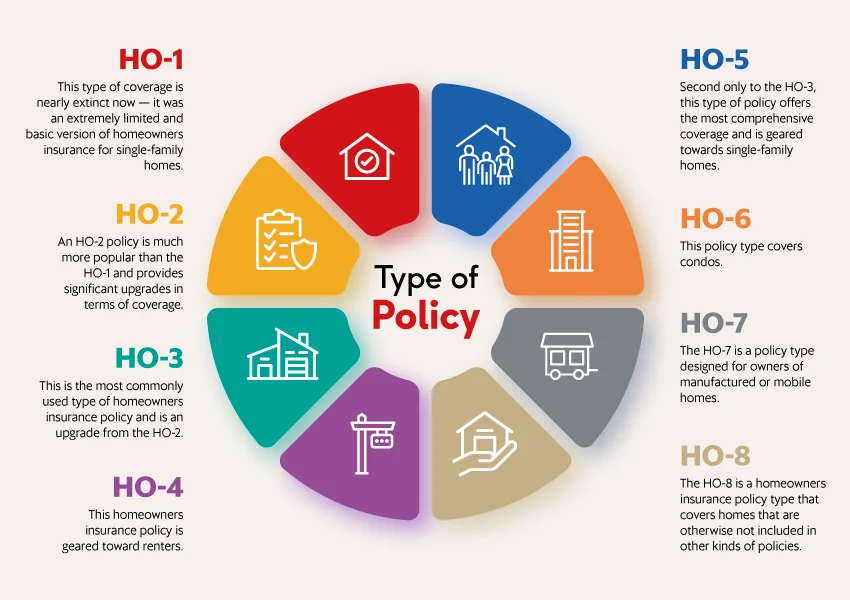
Answers vary: To accommodate different homes and homeowners, there are eight types of homeowners policies providing varying coverage levels, with HO-3 being the most common. Your coverage depends on your policy type.
Damage from flooding in Colchester or anywhere else in Vermont is only covered if you have a flood endorsement on your policy.
Your agent can answer your questions and provide a customized quote that fits all your insurance needs while offering cost savings.
Most Popular Homeowners Insurance Policy in Vermont
The most common policy, the HO-3, covers all perils except exclusions like power failure, earthquake, and negligence. It also covers belongings from 16 perils including fire, windstorm, vandalism, theft, and snow/ice weight.
It is crucial to read and understand your coverage before a catastrophe to ensure you have needed protection. Your agent can help with optional coverage and answer your car insurance questions.
Get the Best Homeowners Insurance Coverage in Vermont Today
Choose InsureOne for all your insurance needs. Our concierge agents shop around and compare home insurance quotes in Vermont to find you high-quality coverage at competitive rates, creating a policy customized just for you. Whether you need home insurance rates in the Shire region or property insurance in Burlington’s Hill Section, we make it easy to find affordable homeowners insurance in Vermont. We are bilingual and ready to assist.
If you are ready for first-rate property insurance in Vermont or want to know how much homeowners insurance costs, call us at (800) 836‑2240, fill out a form for a homeowners insurance quote online, or visit a nearby location.
FAQs
How Much Does Homeowners Insurance Cost in Vermont?
The average cost of homeowners insurance in Vermont is about $1,063 a year for a $300,000 home. The national average is $2,543 a year ($212 a month).
Is Home Insurance Required for Homeowners in Vermont?
While lenders usually require insurance for mortgage holders, home insurance coverage in Vermont is not legally required.
What Weather Risks in Vermont Can Affect My Home Insurance Rates?
Recent snow and rainstorms have caused extensive property damage, raising rates statewide.
Does Vermont Offer Any Discounts or Programs to Help Lower Home Insurance Costs?
There are no state-specific discount programs in Vermont. However, you may save by adjusting your deductible and applying discounts like the multi-policy discount known as bundling.