


Hawaii Homeowners Insurance Quotes
Everything You Need to Know About Home Insurance in Hawaii
Owning a home in Hawaii comes with coverage challenges that homeowners in many mainland states may not face. From hurricane exposure and strong coastal winds to volcanic activity on the Big Island, securing the right homeowners insurance in Hawaii is an important part of protecting your property and financial future.
Homeowners in the state may need to increase coverage or obtain separate policies for hurricanes or windstorms, especially for homes located near the coastline. Certain lava zones on the Big Island may also have higher premiums due to elevated risk levels. In addition, flooding is a major concern across the islands, and standard home insurance in Hawaii does not cover flooding from external sources, so homeowners have to obtain a separate flood policy to protect their homes.
Having adequate home insurance coverage in Hawaii is technically part of your long-term financial planning. You purchase a policy to ensure that if you suffer excessive damage to your house, you will not have to pay for the loss out of pocket. Without coverage, you would have to establish savings to ensure you have enough funds to cover such unpredictable expenses. As you explore homeowners coverage, you may also want to research bundling home and auto policies to simplify bill payment and coverage management and potentially reduce premiums.
Policyholders have lots of questions for their agents: How much is homeowners insurance in Hawaii? Why is home insurance so affordable in Hawaii? What does homeowners insurance cover in Hawaii? Your InsureOne agent can answer all your questions and help you get the best and most affordable homeowners insurance in Hawaii.
How Much Does Homeowners Insurance Cost in Hawaii?
The average cost of home insurance in Hawaii is approximately $659 yearly for a $300,000 house. However, if you are asking “How much is homeowners insurance in Hawaii?” as a general question, you can use the average rate to give you a general idea, but insurers consider many factors that can heavily affect how much you will actually pay.
For example, the construction materials used to build your house affect how much it will cost to rebuild your house.
- Proximity to the coastline: Homes near the coast are subject to wind events. You can mitigate the risk with measures such as installing shutters, impact-resistant windows, and securing roof rafters, but policies are still much higher along the coast because of the elevated risk and the increased replacement cost due to these measures.
- Construction type: If your house has asphalt shingles on the roof, your replacement cost will be lower than if you had slate, and so your premiums will also be lower. But insurers will also consider that slate provides better protection against fires, which can help reduce your rate.
- Roof age: The older your roof, the more likely it is to suffer wind damage or to spring a leak. So if you have a 20-year-old roof, expect to pay more for your policy than if you just installed a new one.
- Fire protection class: Every area gets a classification by the Insurance Services Office based on the location and capabilities of your fire department and its proximity to your house and the water supply, including fire hydrants, in your area. The better the fire protection, the less you will pay for your policy.
- Claims history: Data shows that if you have filed a claim in the past, you are more likely to file one in the future than someone who never filed a claim, so your premiums will be higher than those of a homeowners with a clear history.
- Rebuild cost: Your insurer’s risk is based on the cost to repair or replace your house if it is damaged by a covered peril. Therefore, your rates are directly related to the cost of rebuilding your house.
Because rates depend on many factors, keep in mind that the above rates are estimates and subject to change based on underwriting guidelines and local risk conditions.
Here are some ways you can lower your rates:
- Increase deductibles
- Bundle home and auto coverage
- Install wind mitigation features
- Shop multiple carriers
- Review coverage annually

How To Find Home Insurance in Hawaii
If you have made this state your home or are planning to move there, you might face some obstacles when it comes to finding the right property insurance in Hawaii. Rising costs and the departure of certain carriers have made the process more challenging. However, there are some things you can do to make the search for protection a little easier.
Understanding the Unique Considerations
When it comes to finding property insurance on the Big Island, there are a few factors that make it different from other locations. The same applies to property insurance in coastal Maui. The state’s vulnerability to natural disasters, such as hurricanes and volcanic eruptions, means that homeowners need to ensure they have adequate coverage for these specific risks.
Research and Compare Insurance Providers
To find the best policy for your needs, it is crucial to research and compare home insurance quotes in Hawaii from multiple providers. Look for companies that have experience in the area and understand the unique challenges and risks of issuing homeowners insurance in Hilo and other major cities in your area. Take the time to read customer reviews and ratings to get a sense of their reputation and customer satisfaction.
Assess Your Home’s Risks and Coverage Needs
Every house is different, so it is essential to assess your property’s risks and coverage needs. Consider factors such as proximity to the coast, the age and construction of your house, and any additional features or amenities that may affect your property insurance in coastal areas and other environmentally challenged regions. By understanding these factors, you can ensure that you are appropriately covered and have the right homeowners insurance in Kailua or any major city, regardless of risk factors.
Review and Update Your Policy Annually
Once you have your property insurance in Hawaii in place, it is important to review and update it regularly, especially as circumstances change, such as home improvements or changes in the value of your property. Additionally, staying informed about any updates or changes in the industry can help you make informed decisions about your coverage.
Shop Smarter for Coverage
When comparing Hawaii homeowners insurance quotes, homeowners should:
- Ask about hurricane and windstorm deductibles. Increasing these will reduce your premiums, so if one insurer gives you a lower quote than others, check if the deductibles are the same, because it might be that the more affordable company is simply quoting a policy with a higher deductible than the others.
- Verify replacement cost vs. market value. Make sure that all of your quotes are based on replacement cost when you compare Hawaii homeowners insurance quotes. The market value of your home is not what matters in your policy.
- Use a company like InsureOne that has access to many of the best homeowners insurance companies in Hawaii. Doing so will enable you to compare home insurance quotes in Hawaii and find the best coverage in the state at the most affordable prices available.
Home insurance rates in Maui County might be higher than average for the state, but your agent can help you use these tips and compare home insurance quotes in Hawaii to lower rates throughout the state.
How Do Home Insurance Deductibles Affect Rates in Hawaii?
The amount of your deductible is a big factor in determining your premiums. If you are looking to reduce your premium, you can consider increasing your deductible amount. This is because the higher your deductible, the more you will pay out of pocket if you file a claim, and the less your insurer will have to pay.
Deductibles for fire and other such perils are typically a dollar amount. You might choose a $5,000 deductible, which means that if a fire causes $50,000 in damages, you pay the first $5,000 and your insurer pays $45,000. In this state, policies may include separate hurricane or windstorm deductibles that are based on a percentage rather than a fixed dollar amount. For example, if your home is insured for $500,000 and your hurricane deductible is 2%, you would pay the first $10,000 for hurricane-related damage, and your insurer will pay $490,000.
Choosing the right deductible should involve balancing premium savings with the amount you could comfortably afford during an emergency. So, although increasing your deductible to $15,000 will lower your rate, if you decide to choose a higher deductible, make sure you can come up with that amount should you have to file a claim.
Compare Home Insurance Rates by Coverage Levels in Hawaii
Insurers typically recommend obtaining enough dwelling coverage in Hawaii to rebuild your home fully after a total loss.
When comparing Hawaii homeowners insurance quotes, it is important to understand that replacement cost and market value are different. Your policy should reflect rebuilding expenses, including labor and construction materials, rather than your home’s purchase price. The market value of your home is irrelevant, regardless of whether it is higher or lower than the replacement cost, since your insurer is covering the cost of restoring your home to move-in condition. Mortgage lenders may also require minimum levels of home insurance coverage in Hawaii before approving financing.
The table below showcases the average cost of home insurance in Hawaii for various levels of dwelling coverage.
| Dwelling Coverage in Hawaii | Average Annual Insurance Cost |
|---|---|
| $200,000 | $500 |
| $300,000 | $659 |
| $400,000 | $844 |
| $600,000 | $1,249 |
| $1,000,000 | $2,181 |
Why is home insurance so affordable in Hawaii? At InsureOne, we help you shop multiple carriers to lower the average cost of home insurance in Hawaii even more. We will shop around for you and provide you with the top options so you can choose the best coverage at the best prices in the state.

Is Home Insurance Tax Deductible in Hawaii?
It is a frequently asked question, but unfortunately, homeowners insurance in Hawaii is generally not eligible for tax deductions, except in specific cases where you use a portion of your home for business purposes, such as operating a home office or renting a portion of the house to tenants, in which case, a portion of your premiums becomes a business expense. If the entire home is a rental property, then all of your premiums might be tax-deductible. You should always confirm your eligibility for a tax deduction with your accountant.
Does Hawaii Have the 80% Homeowners Insurance Rule?
In general, the best homeowners insurance companies in Hawaii adhere to the 80/20 rule, also known as the 80% rule. This rule suggests that you should insure your home for a minimum of 80% of its total replacement value. It is important to regularly update this figure to account for inflation and any renovations or additions you make to your home.
Your policy likely includes a clause that allows the insurer to pay only a certain percentage of your claim if you have less than 80% of the total replacement value.
For instance, if your home has a replacement cost of $500,000, it should be insured for at least $400,000 (80% of $500,000). If your coverage falls below this threshold, the insurer will only pay a portion of the minimum coverage purchased. The following are a few quick points every homeowner should know about the 80% rule:
- If you are underinsured and you file a claim, in addition to paying your deductible amount, your insurer might reduce its portion as a penalty by the same percentage that your coverage amount is below the replacement cost.
- You need to review your policy annually for increases in costs such as construction materials, labor, and inflation. All of these raise your replacement cost and can easily make you uncompliant with the 80% rule.
- Renovations may raise rebuilding expenses. For example, if you replaced Formica countertops with marble, it will now cost more to restore your kitchen in the event of a fire. Therefore, whenever you remodel, you should reassess your replacement cost coverage.
Maintaining adequate property insurance in Hawaii can help reduce the risk of unexpected out-of-pocket expenses after a loss due to non-compliance with the 80% rule.
Bundling Home and Auto Insurance in Hawaii
It is a great idea to bundle your auto and dwelling coverage in Hawaii due to several advantages. To begin with, insurers appreciate when you bundle and will typically reduce your premiums by 10% to 25%, which will significantly lower your premiums. In some cases, such as if a fire or a tree damages both your home and your vehicle in a single incident, you might only have to pay one deductible for both claims because you bundled your policies with the same carrier.
It is also very convenient to be able to deal with one company for all your auto and homeowners insurance in Hawaii. From signing up for a policy to handling claims, it is more seamless to work with a company you know and trust. You also might improve your eligibility to receive certain discounts by bundling, such as loyalty discounts, making it even easier to get affordable homeowners insurance in Hawaii.

How Does Home Composition Impact Insurance Rates?
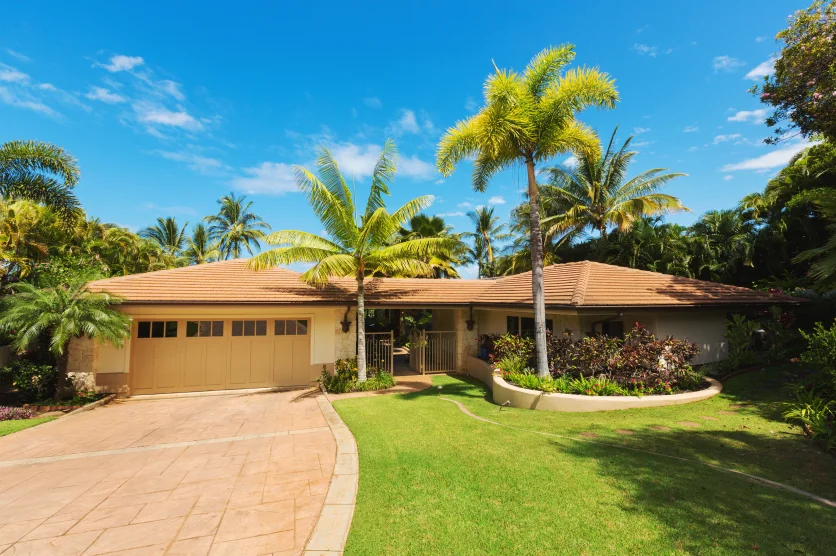
The composition of your home can have a significant impact on your premiums. Factors such as the materials used to construct the home and its resistance to natural disasters like hurricanes and earthquakes can affect the level of risk associated with insuring the property.
Homes built with durable materials and equipped with protective features like reinforced roofs and impact‑resistant windows may qualify for lower rates, as they are better equipped to withstand potential damage.
On the other hand, homes constructed with materials that are more vulnerable may result in higher premiums, reflecting the increased risk of potential claims due to their susceptibility to damage from various hazards. Therefore, many homes are constructed with concrete block vs. wood frame to protect against moisture and seismic activity.
Roof types also make a huge difference. For example, in this state, durable metal roofs are much better suited than asphalt or other traditional materials due to their ability to protect against corrosion from salt in the air, withstand high winds, and protect against tropical UV rays. As mentioned, the age of your roof is also a major underwriting factor, because every roof has a shelf life, and the newer it is, the better it will protect your home and the less likely you are to file a claim.
Using wind or hurricane straps to secure your rafters or trusses can help prevent your roof from blowing off and will lower home insurance rates in Maui County and other areas with a high probability of hurricanes. Storm shutters, impact-resistant glass on windows, impact-resistant roofing materials, and other such improvements will also lower your home insurance in Hawaii and make your home more desirable to insurers.
What Are the Different Types of Home Insurance?
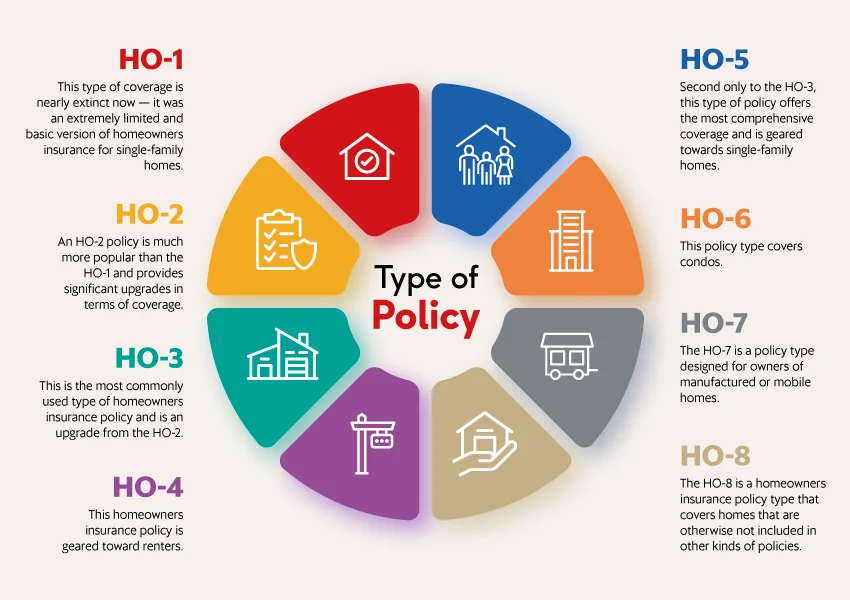
When it comes to protecting your home, there are various types of homeowners policies available to cater to the unique needs of the state. These policies provide coverage for the diverse range of homes found in Hawaii, whether it is a traditional plantation‑style home or a modern beachfront property. What does homeowners insurance cover in Hawaii? It depends on which of these policies you have. These are some examples of the types of policies that are available:
- HO-3: This is the most common policy for homeowners because it offers protection against an extensive list of perils, including volcanic eruptions and lava damage, while still providing affordable homeowners insurance in Hawaii.
- HO-5: The HO-5 is the most enhanced policy. Instead of a list of covered perils, any type of damage is covered unless it is mentioned in a list of specific exclusions. It is not as common as the HO-3 because it comes with a high price tag.
- HO-6: This policy provides similar protection to the HO-3 but serves a different purpose. Also known as a “condo” or “walls-in” policy, the HO-6 is designed for condo or co-op owners and covers from the walls inward.
Does homeowners insurance cover flood or lava damage? Selecting the appropriate home policy is of utmost importance, and our team of InsureOne professionals is here to offer expert guidance to ensure you have the protection you need for your home.
What Risks Should Hawaii Homeowners Be Aware Of?
Homeowners in this state face several environmental risks that can affect both premiums and coverage availability. Does homeowners insurance cover hurricane damage in Hawaii? Does homeowners insurance cover lava damage in Hawaii? Your InsureOne agent will help you understand policy terms, endorsements, and property location, but here are some brief details on perils that might affect home insurance rates in the Honolulu metro area or elsewhere in the state.
Hurricane and Windstorm Damage
Tropical storms and hurricanes can cause major structural damage and may require separate windstorm deductibles.
Flooding
Standard homeowners policies do not usually cover floods. You would have to get separate flood coverage.
Lava Zones
Coverage availability may be limited or unavailable in higher-risk lava zones on the Big Island.
Humidity and Mold
The endless moisture and humidity in this state cause mold to grow and lead to maintenance-related claims.
Ways To Save on Homeowners Insurance in Hawaii
There are several ways you can reduce costs while protecting your home with a policy from the best homeowners insurance companies in Hawaii:
- Bundle home and auto coverage to save 10% to 25% off both policies.
- Increase deductibles if financially feasible to lower your insurer’s exposure, and your insurer will lower your rate.
- Install wind mitigation features to make your home less susceptible to damage from natural disasters.
- Shop multiple carriers through an independent agent so you can compare several Hawaii homeowners insurance quotes for your policy.
- Review coverage annually to ensure you have the coverage you need.
Your InsureOne agent will help you find other such methods and discounts to get you the most affordable homeowners insurance in Hawaii.
Get the Best Homeowners Insurance in Hawaii Today
At InsureOne, we help you find the best homeowners insurance in Honolulu or anywhere else in the state. Let us know your requirements, and we will present you with a range of customizable options.
Why is home insurance so affordable in Hawaii? What does homeowners insurance cover in Hawaii? We strive to answer your questions and help you choose the best coverage for your home. Contact us at (800) 836‑2240 to speak with one of our experts, obtain a quick home policy quote online, or visit one of our convenient Hawaii locations. Do not wait, secure your home with confidence today.
FAQs
Can I Bundle Home and Auto Insurance in Hawaii to Save Money?
Yes. Many insurers will reduce your rates by 10% to 25% for bundling your auto and home insurance coverage in Hawaii.
Does Home Insurance in Hawaii Cover Hurricane or Flood Damage?
Standard policies usually cover wind-related events, but you will need a separate policy for flood damage.
What Factors Affect Home Insurance Rates in Hawaii?
Among other factors, your premiums will be affected by location, rebuilding cost, construction type, roof age, claims history, and proximity to the coastline.
How Much Home Insurance Coverage Do I Need in Hawaii?
Insurers will require you to obtain enough dwelling coverage in Hawaii to cover 80% of the replacement cost of your home, but it is recommended that you carry enough to fully rebuild your home after a covered loss.