


Booster Seats: All You Need to Know

Ashley Walrath is a results-driven content strategist and copywriter known for creating clear, engaging content that connects brands with their audiences while supporting measurabl...

As a parent or caregiver, you want to keep your child safe every time they ride in a vehicle. Correctly using a car seat, booster seat, or seat belt appropriate for your child’s size and developmental stage can significantly reduce the risk of serious injury in a crash.
However, choosing the right child safety seat can be challenging. Children develop at different rates, and age alone does not determine which restraint is appropriate. Height, weight, maturity, the limits established by the car seat manufacturer, and the fit of the vehicle’s seat belt are all important.
Child passenger protection is only one part of keeping your family safe on the road. Having the right auto insurance can also provide valuable financial protection if an accident occurs. Together, proper booster seats and dependable auto insurance coverage can help you feel more prepared whenever your family travels.
Read on to learn when children should transition to booster seats, how to choose between high-back and backless models, how to check seat belt fit, and which common booster seat mistakes to avoid.
Types of Car Seats and Child Restraints
Children generally move through four child passenger safety stages. They should remain in each stage until they reach the seat manufacturer’s maximum height or weight limit and are developmentally ready for the next restraint.
Rear-Facing Car Seat
Infants and young children should ride in a rear-facing car seat with a harness until they reach the maximum height or weight limit allowed by the manufacturer. The CDC notes that this often occurs between ages two and four, although the appropriate time depends on the child and the seat.
A rear-facing seat helps protect a young child’s head, neck, and spine by supporting the body during a crash. Never install a rear-facing seat in front of an active passenger-side air bag.
Forward-Facing Car Seat With a Harness
After outgrowing the rear-facing seat, a child should use a forward-facing car seat with a harness and top tether in the back seat. Children should remain in this type of seat until they reach its maximum height or weight limit.
A five-point harness provides additional support and helps children remain correctly positioned. Moving to a booster seat should not be rushed simply because a child has reached a particular birthday.
Belt-Positioning Booster Seat
Once a child has outgrown the forward-facing harness, a belt-positioning booster helps the vehicle’s lap-and-shoulder belt fit correctly. The booster positions the child so the vehicle’s seat belt can provide proper restraint.
A booster should have clear guides to help position the lap and shoulder belts correctly. If a child frequently leans forward, moves the shoulder belt, unbuckles, or falls out of position while sleeping, they may not be ready for a booster. If their size allows, a forward-facing seat with a harness may still be the better choice. Some boosters also include features such as energy-absorbing foam and side-impact protection.
Vehicle Seat Belt
A child can transition out of a booster seat when the vehicle’s seat belt fits properly without one. This typically happens between ages eight and 12, although readiness depends on the child’s size and how the seat belt fits.
Children should continue riding in the back seat through age 12, using the appropriate seat belt or child safety seat for their size.
When Does a Child Need a Booster Seat?
A child generally needs a booster seat after outgrowing a forward-facing car seat with a harness. They should continue using a booster until the vehicle’s seat belt fits properly without one.
Before making the transition, check the height and weight limits for both the forward-facing seat and the booster. Some harnessed seats accommodate children longer than parents may expect.
Age can provide a general reference, but it should not be the only deciding factor. Consider whether the child:
- Has exceeded the forward-facing harness limits
- Meets the booster seat’s minimum height and weight requirements
- Can sit upright with their back against the vehicle seat
- Can keep the lap and shoulder belts correctly positioned
- Will remain seated properly for the entire trip, including while asleep
If the child meets the size requirements but cannot remain correctly positioned, continue using an appropriate harnessed seat if one is available for their height and weight.
High-Back vs. Backless Booster Seats
High-back and backless boosters both help position the vehicle seat belt correctly. The best option depends on the child, the vehicle, and the seating position.
High-Back Booster Seats
A high-back booster has a back and usually includes a headrest and a guide that helps position the shoulder belt. It may be a good choice when:
- The vehicle seat has a low back or does not provide adequate head support
- The child needs help keeping the shoulder belt in the correct position
- The child frequently sleeps in the vehicle
- Additional side support may help the child remain upright
The sides of a high-back booster can give a sleeping child a place to rest their head without leaning outside the protection of the seat belt. Some children also find high-back models more comfortable during longer trips.
Backless Booster Seats
A backless booster helps position a child so the lap-and-shoulder belt fits properly, but it does not provide back or head support. It may be appropriate when:
- The vehicle seat or head restraint provides adequate support up to at least the top of the child’s ears
- The shoulder belt fits correctly when the booster is used
- The child can remain upright without additional side support
- A smaller, lighter booster is useful for travel, carpools, or switching vehicles
Backless boosters are often easier to carry and may work well when three passengers need to share a rear seat. They should only be used in a seating position with adequate head support and a lap-and-shoulder belt.
The right booster depends on the child, the vehicle, and the seating position. Whichever type you choose, follow the manufacturer’s instructions and use it correctly on every ride.
How to Tell if a Booster Seat Fits Correctly
Check the following every time the child is buckled:
- The lap belt must lie snugly across the upper thighs, not across the stomach.
- The shoulder belt crosses the center of the chest and shoulder.
- The shoulder belt does not touch the neck or face.
- The shoulder belt does not fall off the child’s shoulder.
- The child’s back remains against the booster or vehicle seat.
- The child stays upright without slouching, leaning, or moving the belt.
Always use both the lap belt and shoulder belt. Proper use also means the lap belt stays across the thighs. A booster seat should never be used with a lap-only belt because the shoulder portion is necessary to restrain the child’s upper body.
Read both the booster seat manual and the vehicle owner’s manual for installation. Some boosters can be secured with lower anchors, while others rest on the vehicle’s seat and use the vehicle’s lap-and-shoulder belt to restrain the child.
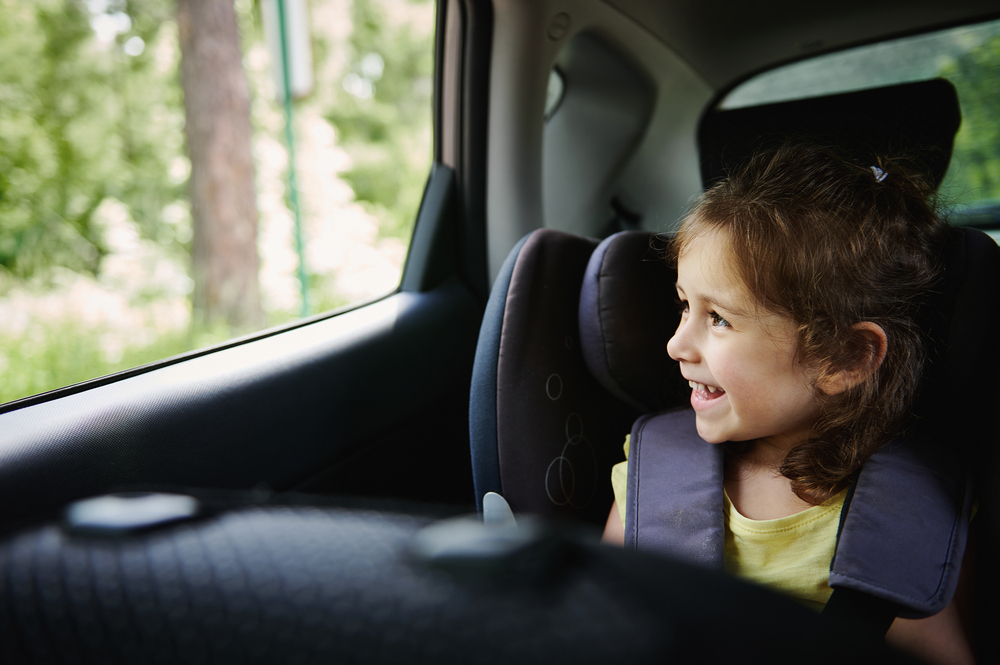
The Five-Step Seat Belt Fit Test
Before allowing a child to stop using a booster seat, perform the five-step seat belt fit test in the vehicle seat where the child will ride:
- Can the child sit with their back completely against the vehicle seat?
- Do the child’s knees bend naturally over the edge of the seat?
- Does the lap belt lie low across the upper thighs rather than the stomach?
- Does the shoulder belt cross the center of the shoulder and chest rather than the neck or face?
- Can the child remain in this position for the entire ride?
The answer must be yes to all five questions. If the answer to even one question is no, the child should continue using a booster seat.
Common Booster Seat Mistakes to Avoid
Even a well-designed booster cannot provide its intended protection when it is used incorrectly. Avoid these common mistakes:
Moving to a Booster Too Early
Keep your child in a forward-facing car seat with a harness and tether until they reach the maximum height or weight limit. Do not make the transition based only on age or because the booster seems more convenient.
Placing the Shoulder Belt Behind the Back
Never allow a child to place the shoulder belt behind their back or under their arm. The belt should cross the child’s shoulder and chest, not the child’s neck or face, because this removes upper-body protection and can place dangerous crash forces on the abdomen.
Using a Booster with a Lap-Only Belt
Belt-positioning boosters require both a lap belt and a shoulder belt. A lap-only belt cannot properly protect the child’s head, chest, and upper body.
Allowing the Lap Belt to Rest on the Stomach
The lap belt should remain low across the upper thighs and hips. A belt positioned across the abdomen can cause serious internal injuries in a crash.
Letting the Child Lean Out of Position
Children should not lean forward to use a device, rest against a door, or place their head outside the shoulder belt. Make sure tablets, toys, drinks, and other items are within reach before driving.
Ignoring Manufacturer Instructions
Each booster has specific minimum and maximum limits and instructions. Check the expiration date before installing or continuing to use the booster. Follow the manufacturer’s instructions, register the seat with the manufacturer so you can receive recall and safety notices, and avoid using a seat that is expired, damaged, recalled, or has an unknown history.
When Can a Child Stop Using a Booster Seat?
Children can stop using a booster when the vehicle’s seat belt fits correctly without one, not simply when they reach a certain age. Many children need a booster until between ages eight and 12, depending on their size, body proportions, and the vehicle’s seating position.
Use the five-step seat belt fit test to determine whether your child is ready. After transitioning out of a booster, children should use a lap-and-shoulder belt on every ride and continue riding in the back seat through age 12.
Traveling With Booster Seats
Booster seat safety matters in any vehicle your child rides in, including carpools, relatives’ cars, rideshares, and rentals. Make sure the vehicle has a lap-and-shoulder belt, adequate head support when required, and a seating position that works with the booster.
For carpools or regular caregivers, make sure the driver knows how to use the booster correctly. Keeping an extra booster with a grandparent or caregiver can also make frequent trips easier.
For rideshares, taxis, and rental cars, plan ahead. Child restraint laws, company policies, and booster availability can vary, so bringing your own booster may be the simplest option.
Finally, check the booster and seat belt fit in every vehicle. A setup that works in your family car may not fit the same way somewhere else.
Protect Your Family on Every Drive
Using the right car seat, booster seat, or seat belt can help keep your child safer on every trip. Review current NHTSA car seat and booster seat recommendations, follow CDC child passenger safety guidance, and check your state’s child restraint laws. For hands-on help, you can also visit a child passenger safety inspection station.
Keeping your family protected on the road also means having auto insurance that fits your needs. To explore your coverage options with InsureOne, call 800-836-2240, visit an InsureOne location, or get a quote online today.
Booster Seat FAQs
When does a child need a booster seat?
A child needs a booster after outgrowing the maximum height or weight limit of a forward-facing car seat with a harness and before the vehicle’s seat belt fits properly without assistance. The child must also meet the booster manufacturer’s requirements and be mature enough to remain correctly positioned during the entire ride.
When can my child stop using a booster seat?
Your child can stop using a booster when they pass all five parts of the seat belt fit test. Many children are not ready until ages 8–12, and proper fit commonly occurs around ages 9–12. Check the fit in every vehicle and seating position the child uses.
Is a backless booster seat as safe as a high-back booster?
Both types can position the seat belt correctly when used according to the manufacturer’s instructions. A backless booster requires a vehicle seat or head restraint that provides adequate head support. A high-back booster may be better for vehicles with low seat backs, children who sleep in the car, or children who need additional support to remain upright.
Can my child use a booster seat with only a lap belt?
No. A belt-positioning booster must be used with a lap-and-shoulder belt. A lap-only belt does not provide the upper-body restraint necessary to protect a child in a crash. Choose another rear seating position with both belt portions or use an appropriate harnessed child restraint.
How do I know if my child fits a seat belt correctly?
The lap belt should lie low and snug across the upper thighs, and the shoulder belt should cross the center of the shoulder and chest. The child should be able to sit against the vehicle seat with their knees bent at the edge and remain in that position throughout the ride. If any part of the five-step test is not met, continue using a booster.