


Does Your Credit Score Affect Car Insurance Rates?

Andrea Perez is a bilingual content writer at InsureOne, where she creates strategic content for multiple brands within the insurance industry. With a background in journalism, edi...

Cyndi Wright is the senior copywriter and content manager at InsureOne. With a career that has spanned many facets of writing across a variety of platforms, Cyndi loves to create a...

Rose Carter is an accomplished content strategist and insurance marketing leader with a proven track record of creating impactful, results-driven content. With expertise in writing...
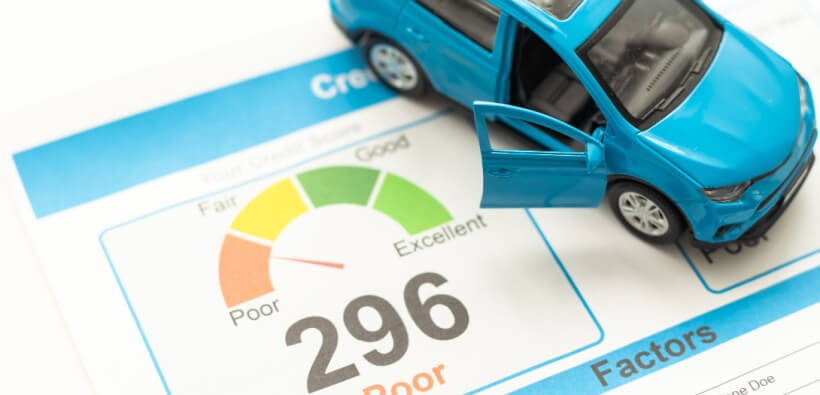
In most states, your credit score can affect how much you pay for car insurance.
When it comes to setting your premium, insurance companies consider a number of different factors, including your driving record and even your home address. Your credit is one of those factors, and your carrier uses a credit-based insurance score to help calculate how much you will pay each month.
Wondering how your credit score affects car insurance? What can you do to improve your standing, and what kinds of savings can you expect to experience? Keep reading to discover everything you need to know about the relationship between car insurance and your credit score.
Exploring the Link Between Your Financial History and Car Coverage Costs
Why does your credit score impact your insurance rates? In short, carriers can be very selective about whom they offer coverage to, and they set rates according to how risky they think it will be to insure someone. Insurers like to point to studies showing bad scores are a regular predictor of someone being more likely to file a claim. Therefore, a bad enough standing means someone might not be able to get a policy, and any policy they do get will have higher rates in order to account for the higher claims risk.
What Is a Credit-Based Insurance Score?
It is one thing to know how financial ratings affect car insurance, but it is another thing to know the precise numbers involved. After all, your idea of a “good” range may differ dramatically from that of your carrier.
Fortunately, it is easy enough to get on the same page. And once you know what a good number looks like in the eyes of your own insurer, you can begin to take proactive measures in order to drive your monthly premium down.
How an Insurance Credit Score Differs From a FICO Score
An insurance credit score calculates how likely you are to file a claim, while a FICO score calculates how likely you are to default on debt.
What Factors Are Included in an Insurance Credit Score
The biggest factors in your insurance credit score are your payment history and your outstanding debt. Other factors include credit age, credit mix, and how many new credit lines you have tried to open recently.
What Is Not Used in Insurance Credit Scoring
Your insurance credit score does not take into account factors like income, employment history, address, or age. It also does not take into account your race, gender, marital status, or your national origin.
What Constitutes a Good Credit Score for Cheaper Auto Insurance?
Carriers adjust car insurance based on financial ratings, though each one has a slightly different way of calculating whether your number is good or not. For the most part, you can use FICO, which measures “good” scores at 670‑739, “very good” at 740‑799, and “excellent” at 800‑850.
How Much Can Credit Impact Your Car Insurance Rates?
The most unfortunate thing about the relationship between credit scores and auto policy premiums is that both are subject to fluctuation. There are obvious things that can drive down your standing, including missing payments and defaulting on accounts. But less obvious activities can also negatively affect it — for example, closing an account (especially an older one).
As the score goes lower, your rates will go higher. And it is important to take immediate steps to repair bad credit, or you could be stuck paying more (in some cases, way more) on your premium each month.
Average Rate Differences Between Good and Poor Credit
Those with poor credit (defined as a score below 580) pay an average annual cost of $4,644 for their car insurance, while those with excellent credit (defined as a score of 800 or more) pay an average of $2,257 for car insurance.
Why Insurers Use Credit as a Risk Indicator
Those with bad credit are statistically far more likely to file claims than those with good credit. Therefore, insurance carriers set premiums according to the risk of that person getting into an accident and subsequently filing a claim.
Can You Be Denied Coverage Due to Credit?
In most states, poor credit may cause you to be denied car insurance coverage. The states that do not take credit into consideration for insurance purposes are California, Hawaii, and Massachusetts.

How a Low Credit Score Can Inflate Your Auto Insurance Rates
Does your credit score impact your insurance rates? In a word, yes: those with bad standings can generally expect to pay 88% more than those who have higher ones. Put another way, those with lower standings pay an average of $144 more per month for full coverage than those with higher ones.
Keep in mind that those are just the averages. It is entirely possible for a bad rating to lead to someone paying an extra $200 per month for their coverage needs. That adds up to an additional $2,400 per year, money that could certainly be better spent on almost anything else.
How To Lower Car Insurance Rates If You Have Poor Credit
Now that you know how your score affects car insurance, there is some good news: there are easy and immediate steps you can take to begin repairing it. Set your payments to automatic (so you never miss them), pay down any of your revolving account balances, keep your oldest accounts open, and avoid applying for new accounts whenever possible.
Additionally, you should consider signing up for a credit monitoring service. Not only is this the easiest way to find out your rating, but many services make it easy to start repairing it and even disputing false charges on your cards.
Improve Your Credit Habits
Improving your credit score can reliably lower your monthly car insurance premium. To improve your score, set bills to autopay so you never miss a payment, and pay off what you can to improve your debt-to-credit ratio. Avoid opening new accounts, and sign up for a free credit monitoring service. Such services will tell you exactly what your score is, alert you to score changes, and help you find discrepancies on your credit report, allowing you to dispute them.
Shop Around for Quotes
You can get free car insurance quotes and even switch policies at any time. No matter your credit score, this can be a great way to obtain a more competitive price on your monthly premium.
Increase Deductibles If Appropriate
The deductible is how much you must pay before insurance kicks in. Lower deductibles lead to higher monthly premiums. Conversely, if you are a safe driver, you can increase your deductible, which will lower your premium regardless of your credit score.
Bundle Policies
If you need more than one type of insurance (like coverage for both your car and your home), you can bundle those policies together through the same carrier. Insurance companies offer discounts to do so as an incentive for customers to get all their coverage from the same provider.
Consider Usage-Based Insurance
Insurance companies set premiums on the assumption that you will regularly drive your vehicle to your workplace and other destinations. But if you work from home and otherwise do not drive very often, you can get a usage-based insurance plan that has a lower premium because you will be on the road less often.
States Where Credit Cannot Be Used to Set Insurance Rates
Can your credit score impact your insurance rates? In the vast majority of cases, the answer is “yes.” However, the precise answer depends on exactly where you live.
Certain states have outright banned credit-based insurance scoring, while others have restricted how credit scores can be used. Which states feature these bans and restrictions? Below, you will find the information you need.
States That Ban Credit-Based Insurance Scoring
Your credit score has no impact on your premium in the following states: Massachusetts, Michigan, Hawaii, and California.
States With Restrictions on Credit Use
Oregon does not use credit scores to determine whether to cancel or renew a policy, but the state insurers can use your score to determine whether they offer you a policy in the first place. Maryland uses credit scores to determine rates, but does not use them for policy approvals, renewals, or cancellations.
Utah considers credit scores when setting rates, but is forbidden from using that as the only factor. After you have been with a carrier for at least 60 days, credit cannot be used as a factor when canceling or renewing the policy. Furthermore, carriers in the state may use credit scores to offer you discounts but not to increase your rate.

Other Factors That Affect Car Insurance Rates
Credit rating is only one factor affecting how much you pay for your automobile premium each month. Other primary factors include your driving history, your claims history, where you live, and your vehicle model and age. Even factors like your age and whether you are married ultimately impact the cost of your premium.
As you can see, these different factors mean that even excellent drivers may see car policy rates rise. By better understanding the factors in question, you can avoid ever paying too much for your car insurance.
Driving History and Claims History
In large part, your premium reflects how likely the carrier thinks you are to file a claim. Therefore, your driving history is a major factor when setting rates because it may be a predictor of future accidents. Additionally, a past history of filing claims makes it more likely you will file additional claims in the future.
Vehicle Type and Value
Vehicle type affects car insurance rates because some cars (usually those with additional safety features) are considered less likely to get into an accident. Additionally, vehicle value is a major factor when setting rates because automobile policies are designed to repair or replace the car in the event of an accident.
Location and Garaging Risk
Insurance providers always consider where the car is going to spend most of its time. If your home neighborhood or your workplace neighborhood (including parking lots and garages) often has people filing claims, your carrier will set a higher rate because of the perceived risk.
Age and Marital Status
Age is a major factor in car insurance rates because very young and very old drivers are far more likely to get into accidents. Additionally, married drivers are less likely to get into accidents and will subsequently pay less than single drivers.
Why Do Insurers Consider More Than Just Your Score?
As usual, it all comes down to who is statistically more likely to get into an accident (which is why the very young and the very old pay more) and how costly it will be to repair or replace your vehicle (which is why what you drive is so important). The less risky you are in the eyes of the carrier, the cheaper your premium.
Find Affordable Car Insurance Regardless of Credit Score
Now you know how credit scores affect car insurance. Moreover, you know how to improve your standing and the different factors that affect your monthly premium. Most importantly, you know how all this information can help you save money each year.
But do you know which insurance company can offer you the most competitive rates regardless of your credit score? At InsureOne, we are here to help you get the rates you deserve at the fairest possible prices. Once you are ready to stop paying more than you have to, come get a quote online. You can also pick up the phone and give us a call at 800‑836‑2240. Finally, always feel free to come find an InsureOne office near you.
Frequently Asked Questions About Credit and Car Insurance
Still have questions about credit scores and auto insurance rates? Below, you will find answers to the most frequently asked questions.
Will Getting an Insurance Quote Affect Your Credit?
Getting insurance quotes at any time does not impact your credit score.
Does Switching Car Insurance Providers Impact Your Credit Score?
Switching car insurance providers has no impact on your credit score.
Are There States Where Credit Does Not Influence Auto Insurance Rates?
The following states have banned the use of credit scores when setting car insurance rates: Massachusetts, Michigan, Hawaii, and California.
How Often Do Insurers Update Credit Information?
Credit information is typically updated whenever you renew your policy.
Will a Good Credit Score Guarantee Lower Auto Insurance Rates?
A good credit score does not completely guarantee low rates because credit is only one factor used by insurance providers. However, it is one of the major factors, and improving your credit is one of the best ways to potentially lower your monthly insurance premiums.
Is It Possible To Get Auto Insurance With a Poor Credit Score?
Many carriers will still offer you car insurance even if you have poor credit. The primary downside is that you are likely to pay more for any insurance you obtain than someone with good credit.
What Should I Do If I Disagree With the Credit Score an Insurer Used?
Ask your insurer which credit bureau they used, what the score was, and what date the information was pulled. Next, get a credit report and dispute any errors you notice. Afterward, you can ask the insurance provider to re-rate your policy based on the updated credit score.