


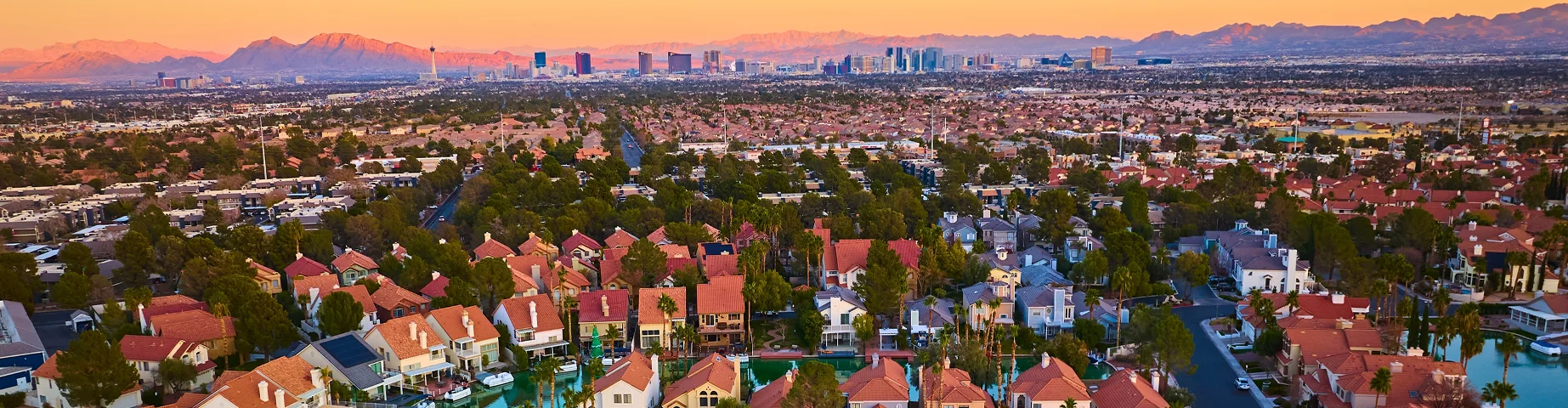
Homeowners Insurance Quotes in Las Vegas, NV
What Las Vegas Homeowners Should Know About Home Insurance
Las Vegas homeowners have different insurance needs depending on where and how they live, from established communities in Summerlin and Spring Valley to newer developments in Centennial Hills and neighborhoods near the Henderson border. Home insurance in Las Vegas is designed to protect the home itself, personal belongings, and your financial responsibility if someone is injured on the property, and it commonly covers damage from fire, theft, and vandalism. The city’s sunny climate and broad mix of single-family homes, condos, and manufactured homes also mean coverage should match the property’s specific risks and rebuilding cost.
The desert setting does not eliminate weather-related risk. Las Vegas homes can be affected by extreme heat, strong winds, monsoon storms, flash flooding, interior water leaks, and wildfire exposure near open desert or foothill areas. These hazards can damage roofs, exterior structures, plumbing systems, air-conditioning equipment, and personal property. Standard homeowners insurance in Nevada may cover some of these losses, while others require separate coverage or an endorsement.
For homeowners across the Las Vegas Valley who want clearer guidance on what to buy and what to compare, this page breaks down typical costs, core coverage types, neighborhood rate differences, local weather and wildfire risks, extra protection options, and ways to save. Comparing Las Vegas homeowners insurance quotes through InsureOne can help you review multiple carriers with an agent and choose protection that fits your home, local exposure, and budget.
What Does Homeowners Insurance Typically Cost in Las Vegas?
The cost of homeowners insurance in Las Vegas is based on more than the home’s current market price. Insurers focus heavily on the amount it would cost to repair or rebuild the property using today’s labor and material prices. They also consider the home’s location, age, square footage, roof condition, construction type, prior claims, safety features, deductible, and coverage limits.
Nevada premiums are often lower than rates in states with frequent hurricanes or widespread tornado losses, but costs can still rise as construction expenses, repair bills, and claim severity increase. Larger homes, custom finishes, pools, detached structures, or high-value belongings may also require higher limits. Reviewing homes that may need more insurance can help owners recognize when a basic limit may not be enough.
The table below provides estimated annual premiums for several common property categories. These figures are useful for comparison, but your actual quote will depend on the characteristics of your home and the coverage you select.
| Type of Home | Average Annual Cost in Las Vegas | Average Annual Cost in Nevada | Average Annual Cost Nationwide |
|---|---|---|---|
| Homes $300K | $1,751 | $1,309 | $2,582 |
| Co ops and Condos | $1,100 | $1,000 | $1,500 |
| High end Homes | $3,200 | $2,800 | $4,500 |
These estimates use the cost of dwelling coverage, a $100,000 liability limit, and a standard $1,000 deductible. Rates can change, and a personalized quote is the best way to understand the cost of protecting your Las Vegas property.

Compare Home Insurance Rates by Dwelling Coverage in Las Vegas
Dwelling coverage is the part of a policy that helps repair or rebuild the physical structure of your home after a covered loss. As the dwelling limit increases, the premium generally increases because the insurer could be responsible for a larger claim. The following table shows estimated annual rates for common coverage amounts in Las Vegas.
| Dwelling Coverage (Las Vegas, NV) | Average Annual Home Insurance Rates |
|---|---|
| $100,000 | $1,200 |
| $200,000 | $1,750 |
| $300,000 | $2,300 |
| $400,000 | $2,850 |
| $500,000 | $3,400 |
These averages do not account for every rating factor. A newer home with updated wiring, plumbing, roofing, and safety systems may qualify for more favorable pricing than an older property with deferred maintenance. Rates may also change based on neighborhood characteristics, wildfire exposure, flood risk, personal claims history, liability limits, and optional protection. An InsureOne agent can compare carriers and help you balance cost with the coverage your home actually needs.
Key Risks That Can Affect Las Vegas Homes
Insurance companies evaluate both property-specific details and regional hazards when setting rates and deciding which coverage options to offer. Las Vegas homeowners should pay particular attention to the following risks.
Extreme Heat and Sun Exposure
Summer temperatures in Las Vegas regularly exceed 100 degrees. Prolonged heat and intense sunlight can accelerate wear on roof coverings, sealants, exterior paint, windows, and outdoor equipment. Air-conditioning systems also work for long periods, which can increase the likelihood of mechanical failure. Routine wear and maintenance are not usually covered, but sudden damage caused by a covered event may be. Keeping the roof, HVAC system, and exterior materials in good condition can reduce the chance of preventable losses.
Monsoon Storms and Flash Flooding
Short, intense monsoon storms can produce heavy rain faster than streets, washes, and drainage systems can carry it away. This creates flash-flood risk even in a desert city, particularly in low-lying areas and locations near washes or flood-control channels.
Flash flooding may affect:
- Low-lying streets and neighborhoods
- Washes, drainage channels, and nearby properties
- Intersections and roadways where water collects quickly
- Homes near flood-control systems or mapped flood zones
Standard homeowners policies generally exclude damage caused by surface water or rising floodwater. A separate flood insurance policy can help protect the structure and covered belongings from losses that a standard policy does not pay for.
Strong Winds and Dust Storms
Wind events can loosen shingles and tiles, damage fences, topple trees, and affect patios, sheds, and other outdoor structures. Wind-driven debris may also damage windows or exterior walls. Dust storms can reduce visibility and push dirt into vents and mechanical systems. Homeowners should secure outdoor furniture, maintain trees, and review how their policy handles roof and exterior damage.
Wildfire Risk Near Open Desert and Foothills
Homes near undeveloped desert land or foothill areas may face greater wildfire exposure than properties in the center of the valley. Insurers may consider vegetation, access for emergency responders, roof materials, and distance from open land when evaluating eligibility and price. Fire-resistant roofing, cleared vegetation, and defensible space can help reduce risk, although available discounts vary by carrier.
Interior Water Damage
A dry climate does not prevent indoor water losses. Plumbing leaks, appliance supply-line failures, air-conditioning condensation, and water heater problems can damage flooring, drywall, cabinets, and personal belongings. Standard policies often cover sudden and accidental water damage, but they usually exclude long-term leaks, neglect, and maintenance problems. Leak detectors and automatic shutoff devices may help limit damage and may qualify for discounts with some insurers.

Additional Coverage Options Las Vegas Homeowners May Need
A standard policy provides a strong foundation, but it may not address every risk or every valuable item in your home. Depending on the property and your financial situation, an agent may recommend endorsements or separate policies that expand protection.
Extended Replacement Cost Protection
Extended replacement cost coverage can provide an additional amount above the dwelling limit if a covered disaster causes rebuilding expenses to exceed expectations. This may be valuable when widespread damage increases demand for contractors and materials. The endorsement does not replace the need for an accurate dwelling limit, but it can add a financial buffer.
Water Backup Coverage
A standard homeowners policy may not cover water that enters the home through a backed-up sewer, drain, or sump system. Water backup coverage can help pay for resulting cleanup and repairs, subject to the policy limit and deductible. It is separate from flood coverage and should be reviewed based on the home’s plumbing and drainage risks.
Equipment Breakdown Coverage
Equipment breakdown coverage may help pay to repair or replace covered household systems after a sudden mechanical or electrical failure. In Las Vegas, this can be especially relevant for air-conditioning equipment that operates heavily during the summer. Normal wear, poor maintenance, and equipment that simply reaches the end of its useful life are generally not covered.
Separate Flood Protection
Flood damage is generally excluded from standard homeowners insurance. Owners in mapped flood zones may be required by their lender to carry separate coverage, but flooding can also occur outside high-risk zones. Comparing private and government-backed flood options can help you determine appropriate limits for the building and personal property.
Scheduled Coverage for Valuable Personal Property Belongings
Standard policies often place special limits on categories such as jewelry, watches, art, and collectibles. Scheduled personal property coverage can insure specific items for higher amounts and may provide broader protection. Separate jewelry insurance may also be appropriate for engagement rings, luxury watches, or collections that exceed standard policy limits.
- Jewelry and engagement rings
- Watches and luxury accessories
- Collectibles and memorabilia
- Fine art and antiques
- High-value electronics and specialty equipment
Why Home Insurance Costs Vary Across the Las Vegas Valley
Two homes with similar values can have different premiums because neighborhood conditions, construction, age, rebuilding costs, and exposure to local hazards are not identical. The following examples show how location can influence insurance needs without assuming that every property in a neighborhood has the same risk.
Summerlin
Summerlin includes many newer and higher-value homes built under more recent construction standards. Updated materials and systems may improve eligibility, while larger square footage, custom features, pools, and higher rebuilding costs may increase required coverage. Homes near the western edge of the valley may also receive additional wildfire and wind review.
Spring Valley
Spring Valley has a broad mix of home ages, construction styles, and property values. A recently renovated home may present a different risk profile than a property with an older roof, plumbing, or electrical system. Insurers may also consider prior claims and the estimated cost of rebuilding in the immediate area.
Centennial Hills
Many Centennial Hills properties are newer and may include modern electrical, plumbing, and safety features. These updates can reduce some underwriting concerns, but larger homes and detached structures may require higher dwelling and other-structures limits. Wind and flash-flood exposure can still vary by exact location.
Communities Near Henderson
Homes near the Henderson border can range from compact planned community properties to larger homes with pools and upgraded finishes. Replacement costs, community construction standards, security features, and proximity to emergency services may all influence premiums. The city name alone does not determine the rate; the individual property details matter more.
Foothill and Desert-Adjacent Neighborhoods
Properties near open desert or foothill areas may receive closer review for wildfire exposure, wind, drainage, and emergency access. Homeowners in these locations should confirm that dwelling limits reflect current rebuilding costs and ask whether extended replacement cost, flood coverage, or higher liability limits are appropriate.
Common Types of Homeowners Insurance Available in Las Vegas
The right policy depends on the type of property you own and the level of protection you want. Understanding the main types of homeowners insurance can make it easier to compare quotes and recognize what is included or excluded. The following policy forms are commonly relevant to Las Vegas residents:
- HO-3 (Special Form): Often used for owner-occupied single-family homes, an HO-3 generally covers the dwelling against all causes of loss except those specifically excluded. Personal belongings are usually covered for named perils listed in the policy.
- HO-6 (Condo Insurance): Designed for condominium and co-op owners, an HO-6 protects personal belongings, interior improvements, liability, and additional living expenses. Coverage should be coordinated with the condominium association’s master policy.
- HO-2 (Broad Form): This named-peril policy covers the home and belongings against a defined list of events, such as fire, theft, lightning, and wind. It may cost less than broader forms but provides more limited protection.
- HO-7 (Mobile Home Form): Built for mobile and manufactured homes, an HO-7 provides coverage similar to an HO-3 but is structured around the construction and ownership needs of these properties.
- Some homeowners may also qualify for broader HO-5 coverage, while older properties may require an HO-8 or a specialized carrier. Optional protections can include extended replacement cost, water backup, scheduled belongings, earthquake coverage, and higher liability limits. Homeowners with significant assets, rental exposures, pools, or other liability concerns may also benefit from umbrella insurance.
Coverage should be based on rebuilding costs rather than the home’s sales price. Market value includes land and local real estate demand, while dwelling coverage is intended to pay for labor and materials needed to repair or rebuild after a covered loss. Reviewing limits after renovations, additions, or major upgrades can reduce the risk of being underinsured.
InsureOne agents can explain policy forms, exclusions, deductibles, and endorsements so you can compare options without paying for protection that does not fit your property. The goal is a policy that addresses your most important risks while remaining practical for your budget.
Practical Ways to Save on Homeowners Insurance in Las Vegas
Lowering your premium should not mean removing protection you may need after a serious loss. The strongest savings strategy is usually to compare carriers, review discounts, and improve the home’s risk profile. These ways to save on homeowners insurance may help reduce costs while keeping coverage aligned with your needs.
Potential savings opportunities include:
- Bundle eligible home and auto policies
- Install a monitored burglar or fire alarm
- Maintain a claims-free insurance history
- Replace an aging or damaged roof
- Use water leak sensors or automatic shutoff devices
- Update older plumbing systems
- Choose a higher deductible you can afford after a loss
- Install smoke detectors and fire alarms
- Modernize older electrical systems
Home and auto insurance bundling may qualify you for a multi-policy discount and simplify billing, service, and renewals. Broader insurance bundling can also include umbrella or other eligible policies. However, the lowest bundled price is not automatically the best value. Compare the total cost and coverage of the bundle with separate policies, and make sure deductibles, limits, and exclusions remain appropriate.
Find Affordable Homeowners Insurance in Las Vegas with InsureOne
A Las Vegas home needs protection that reflects desert heat, sudden storms, local rebuilding costs, and the features of the property itself. InsureOne makes the process easier by helping you compare policies from multiple carriers instead of relying on a single option.
An experienced agent can review your home’s construction, roof, belongings, deductible preferences, and local exposures. You can then compare limits and endorsements for flood, water backup, equipment breakdown, valuable items, and liability. This personalized approach helps you avoid both unnecessary coverage and gaps that could create major out-of-pocket costs.
Start your free quote online, visit an InsureOne office near you, or call (800) 836-2240. Our team can help you find affordable homeowners insurance in Las Vegas that protects your house, personal property, and financial future.
Las Vegas Homeowners Insurance FAQs
Do Mortgage Lenders Require Homeowners Insurance in Las Vegas?
Nevada law does not generally require homeowners to carry a policy, but mortgage lenders usually require coverage while a loan is outstanding. The lender may set minimum requirements for dwelling protection and ask for proof of insurance before closing and at each renewal. Even after a mortgage is paid off, maintaining coverage can protect the home, belongings, liability, and temporary living expenses after a covered loss.
Can Las Vegas Homeowners Add Earthquake Coverage?
Standard homeowners policies typically exclude earthquake damage. Nevada homeowners can often purchase a separate earthquake policy or endorsement, depending on the carrier and property. Coverage may include the dwelling, personal property, and additional living expenses, but earthquake deductibles and limits can differ substantially from those in a standard home policy.
Does Home Insurance Cover Foundation Damage Caused by Drought?
Homeowners insurance usually does not cover foundation movement caused by soil shrinkage, settling, poor construction, or long-term drought conditions. These issues are generally considered maintenance or earth movement rather than sudden covered losses. Regular inspections, drainage control, and prompt repairs can help reduce damage. Review exclusions with your agent because coverage varies by policy.
Can Security Systems Lower Home Insurance Costs in Las Vegas?
Many carriers offer discounts for monitored burglar alarms, fire alarms, smoke detectors, and other protective devices because they may reduce the likelihood or severity of a claim. The discount depends on the insurer and the type of system installed. Keep documentation from the monitoring company and ask your agent which devices qualify before purchasing equipment solely for an insurance discount.