


North Carolina Homeowners Insurance Quotes
Everything You Need to Know About Home Insurance in North Carolina
North Carolina is a nature lover’s paradise with a mild climate and abundant mountains, rivers, and coastlines to explore. North Carolinians might spend the day hiking the Blue Ridge Mountains, Great Smoky Mountains National Park, and Nantahala National Forest, or whitewater rafting the Nantahala River and mountain biking at Ride Rock Creek. Visiting any of the coast’s state parks, like Carolina Beach, home to the Venus flytrap and Sugarloaf Dune, makes for a memorable adventure.
Yet all this beauty and opportunity come with some risk. The state sees an average of two disasters per year, almost half of which are hurricanes with their heavy winds, tornadoes, and severe rainfall. Recent storms, like Helene and Tropical Storm Fred, caused widespread flooding and landslides and have affected all areas of the state. Widespread damage and the risk of increased storm activity led to proposed rate increases of almost 100% in some areas, but the insurance commissioner negotiated lower increases.
You will find just that at InsureOne. Our expert agents shop around to find you the best homeowners insurance options in North Carolina and at the best prices.
How Much Does Homeowners Insurance Cost in North Carolina?
North Carolina homeowners pay an average annual premium of $3,124 for a $300,000 home. This is higher than the national average of $2,543. So why is homeowners insurance so expensive in North Carolina?
Your zip code is a major factor in determining your premium. Areas hit by substantial hurricanes over the past several years — like Helene in 2024, which dumped 31 inches of rain — have led to a surge in claims for wind and water damage. Homebuilding materials and labor costs have risen due to higher demand, along with supply chain issues. These factors have increased rates throughout the state.

How To Find Home Insurance in North Carolina
Home coverage provides more than protection for damage to your home from events like fires, windstorms, and vandalism. It may also provide coverage for other structures, personal property, loss of use, personal liability, and medical payments to others if, depending on the circumstances, they suffer injury on your property. An expert agent can help you figure out the best limits that fit your situation for each of these coverage features.
Once you have a policy, paying your premium in full can help you avoid accidentally forgetting to pay. There is no grace period for North Carolina home coverage, so your policy may be canceled if you fail to make a timely payment.
To help make your property more resistant to damage from rain and windstorms, consider investing in risk mitigation factors, such as:
- Adding hurricane shutters
- Elevating electrical appliances
- Installing flood vents in enclosed areas
- Installing a backflow valve on your sewer system
- Fastening your roof to the walls with hurricane straps
- Using flood-resistant materials, such as tile rather than carpet
If you live in the coastal areas of the state, such as in the Outer Banks, you may qualify for mitigation credits that can earn you insurance discounts if you make certain changes to your property. These are available through FORTIFIED, a voluntary construction and re-roofing program that strengthens homes against severe winds and hail.
If you have difficulty obtaining standard coverage, you may need to check into the FAIR Plan, which is considered the “Market of Last Resort” for protection from damage caused by fire, windstorms, lightning, and vandalism. Another “Market of Last Resort” alternative in North Carolina is the Coastal Property Insurance Pool, which covers homeowners in the state’s 18 eligible coastal counties.
Check with your agent for specifics, whether for standard or these alternative coverage options. Your agent will shop around with the best homeowners insurance companies in North Carolina to find you the best high-quality coverage at an affordable price to fit your unique situation.
How Do Home Insurance Deductibles Affect Rates in North Carolina?
Meeting your agent with a list of questions can help ensure you get all the information you need. You may want to add “How do deductibles work with my policy?” to your list, but here is a quick overview: A deductible is the amount you agree to pay when you must file a claim before your insurer pays its share.
If you choose a large deductible, you will pay a lower premium. If you choose a small deductible, you will pay a higher premium. For a $1,000 deductible with a $500 claim, you pay your full damages out of pocket. In this scenario, if your damages are $1,500, your insurer’s coverage portion comes out to $500.
Many North Carolina insurers also include a separate wind and hail — or hurricane — deductible that is usually between 1% and 5% of the insured value of your home. So, if your home is insured for $200,000, your 5% hurricane deductible would be $10,000 ($200,000 multiplied by .05).
To see how you can save on homeowners insurance, your agent can provide you with a range of deductibles to show you the difference in premium cost so you can compare home insurance quotes in North Carolina to help you decide which one best fits your situation.
How Bundling Can Save You Money in North Carolina
If you are looking for other ways to save money on your homeowners insurance in Charlotte and you also need another type of coverage, ask your agent about bundling them. When you bundle, you save time you would otherwise spend juggling multiple sets of paperwork, dealing with more than one agent, and paying multiple bills. You may choose to bundle your home and auto coverage, which can save you up to 25% on your policies.
If you need landlord insurance for your rental home in Raleigh and property insurance in Durham for your personal residence, you can create one nice tidy package of paperwork by bundling them.
At InsureOne, we are ready to provide you with white-glove service for all your insurance needs — boat, RV, ATV, life, renters, landlord, or any other kind of policy, along with your homeowners policy.
Compare Home Insurance Rates by Coverage Levels in North Carolina
How much is homeowners insurance in North Carolina? That depends.
You can see the average cost of home insurance in North Carolina for homes of different values with $100,000 of liability protection in the following chart:
| Dwelling Coverage (North Carolina) | Average Annual Insurance Cost |
|---|---|
| $200,000 | $1,972 |
| $300,000 | $3,124 |
| $400,000 | $3,904 |
| $600,000 | $5,488 |
| $1,000,000 | $6,403 |
Our agents review your information and shop around to find you high-quality insurance choices that fit your lifestyle and budget.
Is Home Insurance Tax Deductible in North Carolina?
Home insurance coverage in North Carolina is generally not tax deductible, but there are some exceptions:
- You rent out a home to make money
- You use a room in your home or your garage specifically for your business
- You have a casualty loss
A casualty loss is when you suffer damage in a presidentially declared disaster zone that was not fully covered by your insurance — that excluded portion is the deductible portion. However, with each of these situations, there are specific rules, so it is essential that you speak with a tax advisor for updated information about the ever-changing rules to verify whether you qualify.
Does North Carolina Have the 80% Homeowners Insurance Rule?
Most insurers follow the 80% rule as an industry standard (not a law) that confirms you have enough coverage — at least 80% of your home’s replacement value — if you need to file a claim.
To understand which homes need more insurance, just look at the replacement costs of different homes, which are based on various factors, including each home’s design, interior features (types of construction materials), square footage, layout, age, and the cost of building permits.
An Asheville home worth $500,000 would need $400,000 (80% of $500,000) in insurance to have adequate coverage under this rule.
Weather patterns, labor and materials costs, and other factors can influence housing costs. And if you make any upgrades to your property, including outdoor features such as fencing or storage sheds, it is essential to notify your insurer to ensure your coverage is up to date.
Your InsureOne agent is happy to ensure you have the right amount of coverage to protect your home in Greensboro, Elizabeth City, Rowland, or anywhere else in North Carolina.
What Factors Do Insurers Consider in North Carolina?
Just like insurers in other states, North Carolina insurers review specific factors when figuring out your premium. These include:
- Your credit score
- Your claims history
- Your home’s construction materials
- Your home’s mitigation risk features
- Your home’s size (square footage and number of rooms)
- Your home’s safety features (security systems, smoke alarms, etc.)
Insurers also review your proximity to areas prone to certain natural disasters. Hurricane damage is a considerable risk in some regions of the state.
Your agent will also review whether your home is in an area prone to other natural disasters, such as:
- Wildfire
- Hailstones
- Tornadoes
- Landslides
- Snowstorms
- Earthquakes
- Severe thunderstorms
So, does homeowners insurance cover floods in North Carolina? Standard policies exclude flood insurance — you need separate flood insurance for this type of damage. Your agent can help you get set up with flood insurance.
Building codes help protect homes from changing weather patterns and may affect the construction and reconstruction costs. The latest round of North Carolina building codes went into effect in January 2025, with state law requiring updates starting in 2031.
Whether you live in Danbury, Winston-Salem, or anywhere else in North Carolina, your expert agent can answer all your questions and help provide you with top-tier coverage to help protect you from life’s mishaps.

What Are the Different Types of Home Insurance?
What does homeowners insurance cover in North Carolina? That depends on your policy.
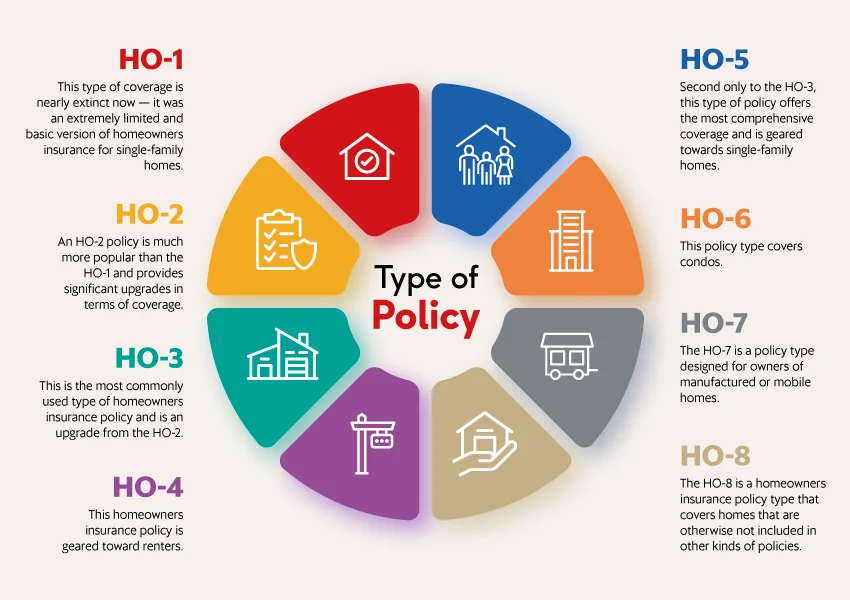
There are eight different types of homeowners insurance policies in North Carolina. Your insurer will start building your policy with one of these types, depending on your home style and your coverage preferences. You can see a brief description of each one in the following chart:
There are a number of endorsements in North Carolina you can add to your policy. They include:
- Earthquake for repairs due to earthquake damage
- Guaranteed Replacement Cost covers any portion of your loss that was not covered by your regular insurance
- Inflation Guard helps keep your replacement value coverage in line with inflation
- Personal Property Replacement Cost extends replacement cost coverage to your personal property, with certain exceptions
- Refrigerated Property Coverage covers property stored in refrigerators and freezers
- Scheduled Personal Property covers high-value possessions that are mobile (jewelry, computers, coins, etc.)
- Water Backup and Sump Pump Overflow for sewer backup or drain overflow damage
- Watercraft covers those operating watercraft for personal liability and medical payments to others, with optional physical damage coverage
If you would like coverage for something not shown here, your agent can give you more information about endorsements, including specific coverage and costs.
What Is the Most Common Homeowners Insurance in North Carolina?
If you own a home in Charlotte or Clayton, or somewhere else in North Carolina, you will need the best homeowners coverage you can count on. The type that many people turn to is the HO-3 policy. It provides reassurance that your home, living expenses, medical payments to others, belongings, and liability expenses will be taken care of (up to policy limits) when the time comes.
Please consult with your agent for the specifics of the HO-3 policy — or any policy that fits your home type. Your expert agent will put together a personalized plan with competitive rates.
Get the Best Homeowners Insurance in North Carolina Today
North Carolina is the place to be. Whether you live near the coast or inland, finding an insurer with white-glove service and cost savings can make all the difference in your insurance buying experience. InsureOne is your one-stop shop for all your insurance needs.
We are ready to provide you with the best North Carolina homeowners insurance quotes. Our experienced agents provide concierge service in English or in Spanish. To get started, give us a call at (800) 836‑2240. You can also get started with a homeowners insurance quote online or visit us at a nearby location.
FAQs
How Much Does Homeowners Insurance Cost in North Carolina?
North Carolina homeowners pay, on average, about $3,124 a year for a $300,000 policy. Your agent will review your specific information and preferences to come up with your exact cost.
Is Homeowners Insurance Required for Homeowners in North Carolina?
Homeowners coverage is not required in North Carolina, but your lender may require it if you have a mortgage.
What Weather Risks in North Carolina Can Affect My Home Insurance Rates?
Hurricanes are the most prevalent threat to North Carolina and cause significant home damage. Insurers review your zip code to see if your home is in a flood zone or susceptible to other natural disasters.
Does North Carolina Offer Any Discounts or Programs That Can Help Lower Home Insurance Costs?
North Carolina’s FORTIFIED program offers homeowner discounts in the form of grants to make certain changes to your roof through the Strengthen Your Roof program.